Ecole Polytechnique ENSTA Ecole des Ponts ENSAE Télécom Paris Télécom SudParis
Share

IP Paris: PhD Students at the Forefront of Numerical Modeling and the Ecological Transition

22 Jan. 2026
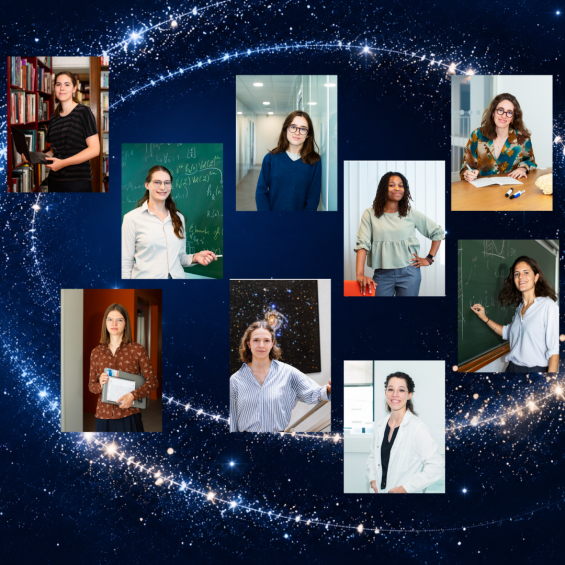
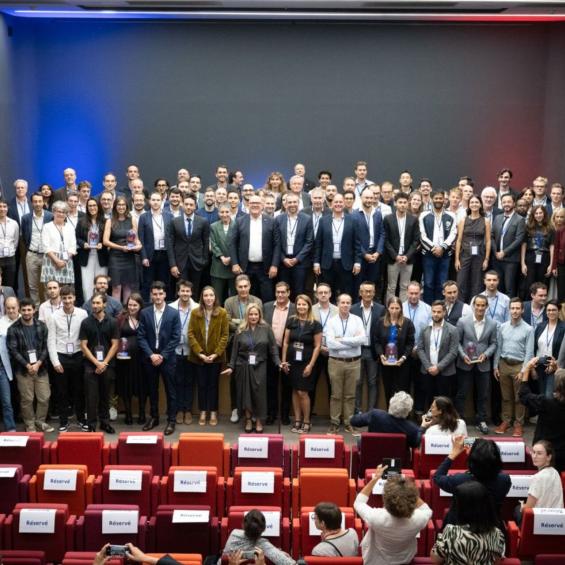
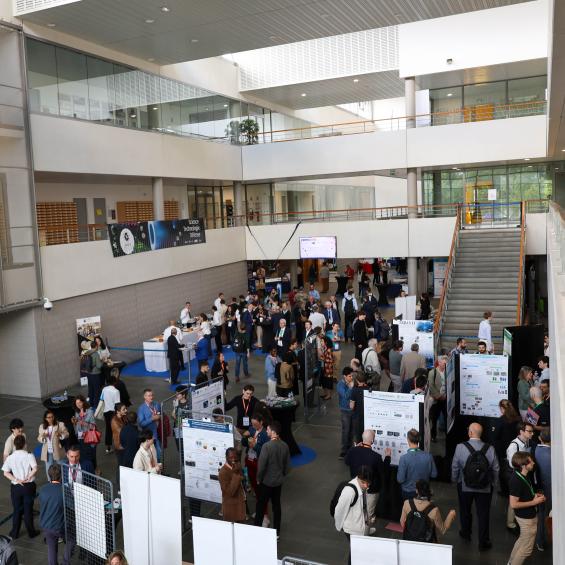
The IP Paris Research Day held on December 1, 2025, was dedicated to numerical modeling and the ecological transition. Twenty-one PhD students from the Institut Polytechnique de Paris had the opportunity to present their research by pitching their doctoral work to the scientific community in one minute. On the occasion of the 2026 REFLEXIONS Conference about Energy Transition, this is a look back at several topics presented on December 1st, representative of the research conducted in this field at IP Paris.
IP Paris: PhD Students at the Forefront of Numerical Modeling and the Ecological Transition

They came from the various schools of the Institut Polytechnique de Paris, which comprises 10 research departments and 45 laboratories. From the study of the dynamics of floating offshore wind turbines to the modeling of the circular economy; from assessing the effectiveness of energy renovation policies to the use of solar energy for the production of fuels or chemical products; from predicting episodes of river pollution by microorganisms to simplifying climate models using neural networks —these are just a few representative examples of the research presented during the 2025 Research Day.

Characterization of sources of microbiological contamination in river using statistical and inverse modeling

Yoan Cartier

Laboratoire Eau Environnement et Systèmes Urbains (LEESU) - Laboratoire d'Hydraulique Saint Venant (LHSV)

How can the sources of bacterial contamination in urban rivers be precisely identified? In his PhD thesis, Yoan Cartier uses statistics and modeling to quantify the impact of Parisian combined sewer overflows on the microbiological quality of the Seine River and to better anticipate pollution events.

What is your PhD research about?

Rivers are essential for biodiversity and human activities, yet these same activities contribute to water quality degradation, notably restricting bathing. One key criterion for assessing water quality is contamination by fecal indicator bacteria (FIB), which is the focus of my thesis.

To effectively manage river water quality, it is crucial to identify sources of microbial contamination. In urban environments, these sources are numerous and linked to sewer system operation. During rainfall events, combined sewer systems—mixing wastewater and stormwater—can become saturated, causing part of the flow to be discharged directly into rivers via combined sewer overflows (CSOs).

My research aims to quantify the contribution of each Parisian CSO to observed water quality degradation in the Seine. I first model CSO discharge based on precipitation data, enabling anticipation of overflow behavior from weather forecasts. I then estimate FIB concentrations during overflow events using high-frequency in situ microbiological water quality measurements. This approach makes it possible to identify the most contaminating sources.

What are the direct or potential applications?

The results of this thesis are applicable to urban water quality management. Water agencies, local authorities, and sector stakeholders could use them to identify the CSOs contributing most to bacterial contamination. The models could also serve as early-warning tools to better manage drinking water intakes or bathing sites by anticipating contamination events based on weather forecasts.

More broadly, the results provide local authorities with insights into management strategies to reduce contamination, such as prioritizing areas for soil de-sealing to limit overflows or implementing urine and fecal matter reuse systems to reduce pollutant loads.

What motivated you to pursue a PhD in this field?

From my perspective, environmental science research serves several purposes: improving our understanding of the world, raising awareness of risks, and proposing solutions—objectively and without short-term profit motives. I am convinced that biodiversity loss is the most dramatic consequence of the current environmental context, and that the best way to address eco-anxiety is through action.

My thesis focuses on one of the three main levers for slowing this trend—pollution (the others being habitat destruction and resource overexploitation). On a daily basis, I can therefore satisfy my curiosity through applied mathematics while fulfilling my need for meaning by contributing to environmentally responsible human activities.tueuses de l’environnement.


A Model of the Smartphone Circular Economy to Study Buy-Back Policies

Tiphaine George

Information Processing and Communications Laboratory (LTCI)

How can smartphone buy-back policies be designed to truly benefit the environment? In her PhD thesis, Tiphaine George develops an innovative mathematical model of the circular economy of smartphones to assess the effectiveness of buy-back policies, taking into account their conflicting effects on recycling, device replacement rates, and consumer behavior.

What is your PhD research about?

My research is conducted in a context where information and communication technologies account for 4% of global emissions and have a significant environmental impact. It focuses on the mathematical modeling of the circular economy applied to smartphones. The main objective is to analyze how buy-back policies—offered to consumers when they replace their devices—can help reduce pollutant emissions and waste.

While such measures encourage recycling and refurbishment, they may also incentivize the purchase of new devices and more frequent replacement cycles. This raises questions about their actual effectiveness, the expected environmental benefits, and the design of optimal policies.

To address this, I developed an innovative analytical model that simultaneously captures these conflicting effects and identifies an optimal buy-back value. The model includes several categories of phones (premium, basic, refurbished), assumes that a central actor controls the buy-back price of premium devices and influences replacement frequency and return rates, and segments consumers based on their sensitivity to buy-back incentives to reflect real-world behavior. The influence of additional factors, such as eco-design and consumer awareness, is also assessed.

What are the direct or potential applications?

This model is primarily relevant for stakeholders involved in smartphone life-cycle management, including operators, refurbishers, and public decision-makers. It serves as a decision-support tool for designing public policies or corporate strategies and for evaluating the environmental impact of buy-back schemes. It helps identify optimal approaches to promoting sustainability by balancing the collection of used phones with replacement frequency.

More broadly, this methodological framework can be adapted to other sectors involving buy-back and resale of second-hand products (automotive, household appliances, electronic equipment), opening new pathways toward an industrial-scale circular economy.

What motivated you to pursue a PhD in this field?

I had the opportunity to complete an internship on this topic prior to my PhD, and the experience convinced me to continue along this path. It made sense to me, particularly because I strongly believe that science should address major societal challenges such as the ecological transition. This work also mobilizes my core expertise in optimization and allows me to apply it to a concrete, high-impact domain. I feel supported in developing models aligned with my scientific interests, making this PhD a natural and motivating continuation of my academic journey.

Investigation of dynamics of heave plates for floating offshore wind turbines

Francisco Jacome Llerena 

Laboratoire d'hydraulique Saint Venant (LHSV) 

How can the stability of floating offshore wind turbines be improved in the presence of waves? In his PhD thesis, Francisco Jacome Llerena experimentally studies the dynamics of heave plates used on semi-submersible foundations. The goal is to better understand wave-induced damping mechanisms and optimize the offshore behavior of these structures.

What is your PhD research about?

While most current offshore wind turbines are bottom-fixed, the next generation of wind farms will primarily rely on floating technologies. These offer advantages such as better exploitation of steady offshore winds, reduced visual and environmental impact, and simpler, more cost-effective installation at port facilities.

My research focuses on floating offshore wind systems, particularly turbines supported by semi-submersible or beam-type foundations. These technologies often include heave plates, which improve structural dynamics—especially vertical motions—under wave loading. This improvement is achieved through increased inertia effects (added mass) and enhanced damping.

The objective of my work is to understand the damping mechanisms involved by analyzing the flow structures generated by the plates and their interaction with waves. This experimental research is conducted using the wave flume at EDF Lab in Chatou (France). Plate oscillations are imposed using a linear actuator, while forces, displacements, and water surface elevation are measured to characterize plate performance.

What are the direct or potential applications?

My research aims to contribute to ongoing developments in the offshore wind energy industry.

What motivated you to pursue a PhD in this field?

I completed the Master of Engineering (MEng), Sciences and Technologies for Energy at IP Paris, which focuses on renewable energies. During this program, I became increasingly interested in offshore wind energy, leading to an internship at EDF on the topic. Wanting to further explore this area of relevance for the energy sector motivated me to pursue a PhD.

Development of hybrid ZnO nanostructured layers electrodeposited on high-efficiency CIGS solar cells for enhanced photoelectrochemical CO2 reduction

Ngoc Diep LE

Institut Photovoltaïque d'Île-de-France (IPVF) 

How can CO₂ be converted into fuels or chemicals using solar energy? In her PhD thesis, Ngoc Diep Le develops innovative photoelectrodes based on nanostructured solar cells integrating active catalysts to improve the efficiency, selectivity, and durability of photoelectrochemical CO₂ reduction.

What is your PhD research about?

My PhD research focuses on developing innovative photoelectrodes designed to convert CO₂ into fuels or chemicals using solar energy. The main objective is to harness the excellent performance of photovoltaic absorbers made of copper indium gallium diselenide—Cu(In,Ga)Se₂ (CIGS)—widely used in solar cells, to generate high photocurrents while valorizing CO₂.

This requires modifying the window layer—the thin semiconductor layer on the illuminated side of the cell—made of zinc oxide (ZnO). It is nanostructured using nanoporous layers or nanorods, into which molecular catalysts active for CO₂ reduction are integrated. These hybrid ZnO/catalyst architectures are designed and optimized to improve the efficiency, selectivity, and stability of the photoelectrochemical process.

My work focuses on controlling the thickness and morphology of the nanostructures, depositing catalysts, and studying their physicochemical and photoelectrochemical properties using spectroscopic and electrochemical characterization techniques. The use of various nanostructured architectures makes these photoelectrodes innovative by increasing the number of active sites, improving product selectivity, and enhancing durability.

What are the direct or potential applications?

The direct and potential applications of this research include CO₂ valorization and the production of green fuels and chemicals such as carbon monoxide (CO), formic acid (HCOOH), and methanol (CH₃OH) using solar energy. This work contributes to the development of sustainable technologies for the energy and environmental sectors, with the goal of reducing greenhouse gas emissions.

What motivated you to pursue a PhD in this field?

I chose to pursue this PhD out of interest in renewable energies and sustainable chemistry, and from a desire to contribute to solutions addressing climate change. IP Paris provides a high-quality scientific environment that supports this approach, notably through the excellence of the IPVF laboratories and collaborations with the eMOCA team at the Paris Institute of Molecular Chemistry (Sorbonne University–CNRS), which is recognized for its expertise in materials and CO₂ reduction.

From subsidies to rental bans: modeling policy impacts on the French housing stock with Res-IRF

Victor Mannoni

Centre international de recherche sur l'environnement et le développement (CIRED)

How can the effectiveness of energy renovation policies be assessed in the face of constraints in the real estate market? In his PhD thesis, Victor Mannoni enhances the Res-IRF residential energy demand microsimulation model for space heating. He incorporates real estate dynamics and imperfect competition in renovation markets in order to better measure the impact of subsidies and rental bans on energy-inefficient housing within the French housing stock.

What is your PhD research about?

In the context of climate change, energy renovation of residential buildings is an effective lever for reducing energy consumption and greenhouse gas emissions. However, renovation rates remain well below policy targets, which has led to the implementation of various public policies. To enable forward-looking evaluations of these policies, the International Research Center on Environment and Development (CIRED) has developed a microsimulation model of residential energy demand for heating, Res-IRF.

The originality of this tool lies in its consideration of the main barriers to investment, such as the landlord–tenant dilemma and coordination issues in multi-owner buildings. My thesis contributes to the development of Res-IRF by integrating feedback effects from real estate markets in order to more realistically model the impacts of rental bans on energy-inefficient dwellings. It also enables the model to account for imperfect competition in renovation markets, allowing for a more precise assessment of the economic impacts of public policies.

What are the direct or potential applications?

This research primarily aims to improve the evaluation of existing or planned energy renovation policies, such as MaPrimeRénov’, Energy Savings Certificates, or bans on renting energy-inefficient housing. Several public administrations already use the Res-IRF model, notably the Directorate General for Energy and Climate (DGEC), within the framework of evaluating the residential component of France’s National Low-Carbon Strategy (SNBC).

What motivated you to pursue a PhD in this field?

I was mainly drawn by the structural role and complexity of the building sector. It plays a key role in the economy and in household living conditions, while being highly complex due to the heterogeneity of the housing stock. Each renovation project and each building has its own characteristics, making it a challenging object of analysis. Following training in building engineering and a research internship focused on barriers and motivations for energy renovation, this PhD project on modeling real estate and competitive barriers immediately appealed to me. It also gave me the opportunity to train in economics (a new field for me) while further developing my modeling skills in a concrete and complex sector.

Why did you choose to pursue your PhD at IP Paris?

I chose the Institut Polytechnique de Paris for the quality of its academic and scientific environment, as well as for the presence of research teams working at the intersection of economics, energy, environment, and modeling. IP Paris’s national and international visibility also provides a favorable framework for conducting and disseminating research.

Meta-modelling paths of simple climate models using Neural Networks and Dirichlet polynomials: An application to DICE

Liu Yushan

Center for Applied Mathematics (CMAP)

How can the evaluation of climate policies be accelerated without compromising scientific rigor? In his PhD thesis, Liu Yushan develops a fast climate emulator of the Dynamic Integrated Climate–Economy (DICE) model, widely used by climate economists, public and international institutions, and climate policy analysts. His approach combines neural networks and exponential functions to accurately reproduce temperature trajectories derived from complex emissions scenarios.

What is your PhD research about?

My doctoral research focuses on accelerating climate–economy simulations while preserving their scientific structure. I study the climate module of the DICE model, which uses systems of differential equations to represent how greenhouse gas emissions affect temperature evolution. The aim of my thesis is to build a simplified and fast model that avoids repeatedly solving these computationally expensive equations.

Complex emissions scenarios are first represented in a compact form based on exponential functions (Dirichlet polynomials). A neural network is then trained to directly map these encoded emissions to temperature trajectories. Appropriate time scaling ensures mathematical regularity of the model functions, enabling effective learning and producing results that are both efficient and theoretically sound.

The result is a climate emulator that is both fast and faithful to the original DICE model.

What are the direct or potential applications?

This work enables rapid evaluation of climate scenarios within integrated assessment models (IAMs), which link climate, economy, and society to assess climate change impacts and mitigation policies. It is particularly useful for policy analysis, climate stress testing, and uncertainty quantification, all of which require large numbers of simulations. This methodology is intended for researchers and practitioners in climate economics, public policy, finance, and insurance, as well as institutions such as central banks and public agencies working on climate risk assessment.

What motivated you to pursue a PhD in this field?

Combining rigorous mathematics with real-world climate issues strongly motivated me. This research allows me to bridge mathematical theory, numerical modeling, and machine learning while developing tools that are both scientifically grounded and practically useful. The Applied Mathematics Center at École Polytechnique provides an ideal environment to work at the interface of mathematics, climate modeling, and economic applications. More broadly, IP Paris offers strong expertise in applied mathematics and a high-quality interdisciplinary research environment.

*CIRED: a joint research unit CNRS, AgroParisTech, Cirad, École nationale des ponts et chaussées, EHESS

*LHSV: a research lab Cerema, École des ponts ParisTech, EDF R&D

*IPVF: a joint research unit CNRS, École polytechnique, ENSCP, IPVF SAS, Institut Polytechnique de Paris, 91120 Palaiseau, France 

*LEESU : a joint research unit École nationale des ponts et chaussées, Université Paris-Est Créteil

*CMAP :a  joint research unit CNRS, Inria, École Polytechnique, Institut Polytechnique de Paris, 91120 Palaiseau, France

*LTCI : a research lab Télécom Paris, Institut Polytechnique de Paris, 91120 Palaiseau, France