



At IP Paris, fluid mechanics is being used to develop floating wind turbines and diversify energy sources
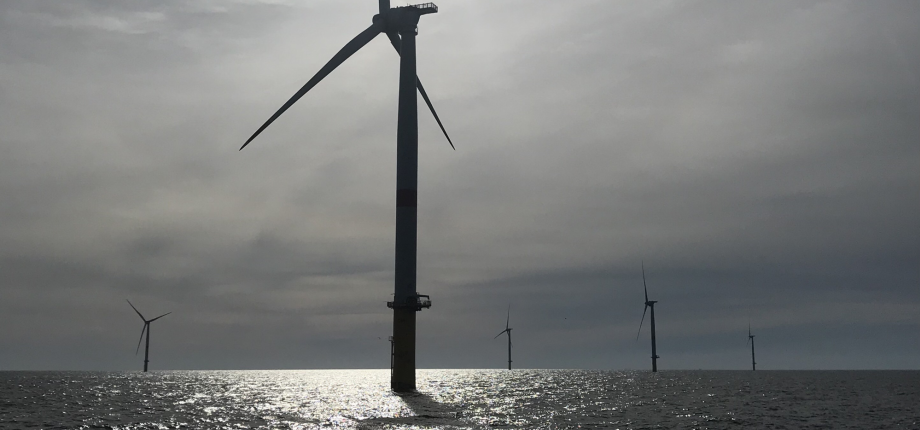
Mediterranean Sea, Gulf of Fos, 17 km off the French coast. The three floating wind turbines of the Provence Grand Large project are securely anchored to the seabed. The farm delivers 25 MW of electricity (equivalent to the annual consumption of 45,000 inhabitants) and foreshadows the devices that will be deployed in Europe by 2030.
Today, most offshore wind turbines are fixed, installed on shallow seabeds a few kilometers from the coast. But at this distance, they remain visible and the winds are not always constant. With their floating cousins, it is possible to overcome these constraints by seeking stronger, more regular, and more predictable winds a hundred kilometers from the coast. “However, maintenance difficulties (access, monitoring) mean that their number must be reduced and, in return, their size and power increased. The height of these future wind turbines will be equivalent to that of the Eiffel Tower!” points out Luc Pastur, associate professor at ENSTA's Laboratory of Mechanics and Interfaces (LMI)*.
Some Asian countries, such as China, Korea, and Japan, are already commissioning floating turbines with a capacity of 15 to 20 MW. France and Europe are also positioning themselves in the race with the announcement of 21 MW turbines and pilot farms such as Provence Grand Large.
Holes to dampen the pounding motion
In this context, Luc Pastur is co-supervising a thesis dedicated to the study of damping plates fitted to certain models of floating wind turbines**. “These are subject to a pounding motion that affects their wind catch, and therefore energy production, and increases structural fatigue,” explains the researcher. The plates counteract this pounding by entraining a large mass of fluid in their oscillating motion and generating turbulent flow structures. They then add the inertia of the displaced fluid to that of the wind turbine, and the flow structures produced are responsible for an additional damping phenomenon that we are seeking to maximize. Although the role of the plates' flow structures in this phenomenon has been documented, the physics at work are not well understood. “By describing it, it will be possible to optimize the geometry of the plates, the damping they induce, and ultimately the production of electricity.”
To carry out this work, scientists are working on the assumption that the turbulence created by the anti-pitching plates dissipates the energy contained in the pitching experienced by wind turbines. "With the oscillating motion, vortices are created at the edges of the plates, around which they wrap. In addition, when the plates are pierced, jets of water are produced through the holes. These can then cause a cascade of vortex structures from the largest scales—those of the plates—to the smallest scales, where they are dissipated by viscosity," describes Luc Pastur.
A wave channel installed at the EDF Lab in Chatou makes it possible to experimentally recreate the waves that are most damaging to floating wind turbines. “These are the waves whose rhythm resonates with the natural vertical movement of the wind turbine and amplifies the pounding phenomenon.”
By adding a special imaging technique—particle image velocimetry—the researchers are mapping the entire velocity field of the fluid around the oscillating plates. Another thesis should complement this work with numerical simulations, providing access to more parameters and directing studies toward more complex plate configurations. “With such a device, we will characterize the flow structures and their turbulent nature, quantify the energy they carry with them, and try to correlate all of this with the added damping,” explains Luc Pastur.
Training future offshore wind energy experts
At the same time, the researcher continues his work as head of the Offwind master's program dedicated to offshore wind energy. Supported by ENSTA and ENPC, and coordinated by the Institut Polytechnique de Paris, Offwind won the 2024 call for expressions of interest in Skills and Jobs of the Future (CMA) launched by France 2030. “Our goal is also to raise awareness among students in the bac + 3 to bac + 8 education system in order to inspire vocations and prepare future engineers for the sector.” The training courses offered therefore meet the needs of the sector, and the program's industrial partners contribute by providing speakers or funding for CIFRE theses. “The first Master's 2 class began in September 2025. Research activity on offshore wind power will follow at the end of 2026 with the program's first theses,” says the researcher.
**Investigation of dynamics of heave plates for floating offshore wind turbines, led by Fracisco Jacome Llerena, co-supervised by Luc Pastur, Jeff Harris, and Rémi Carmigniani.
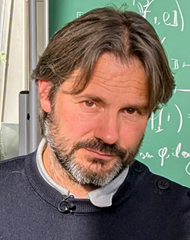
About Luc Pastur
Luc Pastur is Associate Professor at ENSTA, Director of the OFFWIND program, Head of the Offshore Energy course in the third year of the ENSTA engineering program, and co-director of the WAPE (Water, Air, Pollution and Energy) master's program at the Institut polytechnique de Paris. His specialty is fluid mechanics, focusing on applications in collaboration with industrial partners (Thales, CEA, EDF), energy within the framework of the E4C and CIMO interdisciplinary centers, and defense in collaboration with the CIEDS interdisciplinary center at the Institut polytechnique de Paris.
*LMI - a joint research unit ENSTA, Institut Polytechnique Paris, 91120 Palaiseau, France