



At IP Paris, research aims to improve public tendering mechanisms for subsidizing renewable energies
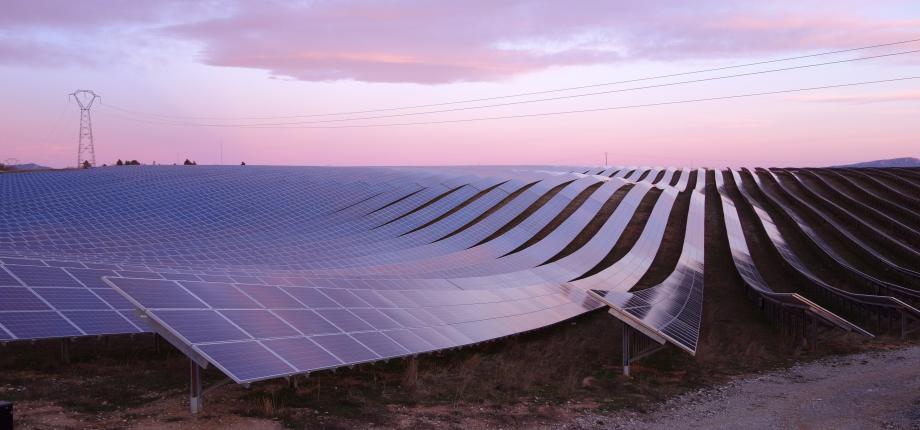
For the past fifteen years, the French government has been financing major energy transition projects through calls for tenders, with a particular focus on supporting renewable electricity production. However, it faces several dilemmas. "Beyond the goal of minimizing costs, government agencies are often subject to numerous constraints: complying with European directives, insuring producers against risk, protecting French industry, etc. to such an extent that the contracts established with producers sometimes contain inconsistencies and lead to pitfalls that were not anticipated by the authorities responsible for the subsidy mechanisms," notes Laurent Lamy, lecturer and researcher at the International Research Center on Environment and Development (CIRED*) at ENPC.
An unexpected counterproductive effect
One of the topics he addresses is particularly revealing of this problem. In 2022, the war that broke out between Ukraine and Russia caused a considerable increase in electricity prices on wholesale markets (by a factor of 1 to 10). This situation should, in theory, have benefited electricity producers, particularly those using renewable energy, and encouraged them to produce as much as possible. However, the signatories to certain contracts were losing money by producing electricity at least 20% of the time.
How can such a paradox be explained? The first contracts signed in the past stipulated that the state would buy back renewable electricity production at a fixed price per megawatt hour (MWh), regardless of market conditions. “This situation had already contributed to episodes of negative or zero prices when production of this energy was high and demand was low, for example during the lockdown in April 2020,” explains the researcher. However, in recent years, in accordance with European directives, new contracts stipulate remuneration indexed to wholesale market prices in order to send a price signal to producers. Producers then sell their electricity freely on the markets and receive additional remuneration from the government. The contracts between the two parties include insurance clauses that protect producers against uncertainties on these same wholesale markets.
Thus, if the contract specifies a reference price of €70 per MWh to its holder and the average market price of electricity for a given month is lower than this reference price, the State pays the producer the difference for each MWh produced. Conversely, if the market price is higher than the reference price, the producer reimburses the State for the difference between the reference price and the average price.
To simplify matters, let's imagine that there are only two possible outcomes for hourly prices on the electricity markets for a given month: an off-peak period at $200 and a peak period at $600, giving a monthly average of $400. If the guaranteed average price is €70, the contract holder will then have to reimburse the State €330 for each MWh produced, regardless of the period. In fact, they will earn €270 for each MWh produced during peak periods and lose €130 per MWh during off-peak periods (negative income). “More generally, producers have an interest in cutting back on production during hours when the selling price becomes so low that the difference with the average price on wholesale markets is greater than the reference price established by the contract,” explains Laurent Lamy. Such a decision can then lead to a further increase in average prices and encourage players in the sector to cut back on production even more.
Working with the regulator
To analyze this phenomenon, the researcher first dissects the regulations in force and the rules for awarding contracts, as well as their variations, in different European countries. He then translates them mathematically. “This is an unusual approach in research. It is more common to rely on simplified reference texts that do not fully reflect reality.”
Laurent Lamy then empirically assesses the perverse incentives induced by these award rules. This involves, for example, measuring the number of hours for which it would have been in the interest of a given producer to cut production and the financial gains that could have been derived from such strategic behavior. Then, based on conceptual assumptions, he determines the economic equilibria that emerge when large numbers of producers respond to such perverse incentives. He then estimates the impacts in terms of social welfare. “The innovation lies in the fact that we have carefully formalized the reality of the mechanisms in place. It appears that those studied are likely to generate significant losses,” the researcher points out.
Very often, the rules governing these calls for tenders are inspired by practices in other European countries. When transposed to France, which has a specific production and demand profile, this can lead to inefficiencies. “There is a strong seasonal effect on demand here due to electric heating, which is much less the case elsewhere where this type of installation is less widespread,” Laurent Lamy points out.
The researcher has shared his findings with public bodies such as ADEME, the Directorate-General for Energy and Climate (DGEC) of the Ministry for Ecological Transition, and the Energy Regulatory Commission (CRE). “The ultimate goal is to significantly improve the rules for designing tenders so that the government can select the best projects at the lowest cost.” One of his doctoral students has also signed a partnership agreement with the CRE to analyze confidential data on wholesale markets and identify strategic behaviors among producers. He also plans to study the decarbonization tenders launched by ADEME as part of the France 2030 plan.

About Laurent Lamy
Laurent Lamy is currently an ENPC research fellow at CIRED (Centre international de recherche sur l’environnement et le développement), a joint research unit with AgroParisTech, Cirad, CNRS, EHESS and ENPC. His work has largely focused on the design of auctions and procurement markets, both from a theoretical and an applied perspective. He has published in leading general economic journals, including the American Economic Review, the Journal of Political Economy and the Journal of the European Economic Association. He received his PhD in economics from École nationale des ponts et chaussées, and earned engineering degrees from ENPC and from Ecole Polytechnique and a master in economics from EHESS.
>> Laurent Lamy on CIRE website
*CIRED : a joint research unit CNRS, AgroParisTech, Cirad, École nationale des ponts et chaussée, EHESS