



Three IP Paris researchers awarded ERC Starting Grants
Quantum Algorithms and Information
At the Inria Centre of Institut Polytechnique de Paris, Cambyse Rouzé seeks to determine when quantum algorithms using probabilistic methods can be more efficient than classical methods for simulating complex physical systems. His Q-GIBBS project – Quantum advantage through Gibbs sampling (QURIOSITY team) – aims in particular to compare their performance and rigorously demonstrate the existence of a genuine quantum advantage. He will also seek to make these algorithms reliable despite errors caused by the noise that affects quantum computers.
With QINF – fundamental laws ruling Quantum INFormation: bits, qubits and fermionic bits (febits) in networks (PHIQUS team) – Marc-Olivier Renou seeks to use certain quantum particles, known as fermions, to transmit and process information in ways that cannot be reproduced using standard qubits. In particular, the project explores encoding information through the presence or absence of a fermion, thereby creating a new unit of information called a “febit.” More broadly, QINF will investigate what these new forms of quantum information can bring to communication networks and distributed computing, including reducing the number of exchanges required to transmit information, manage communications and allocate resources.
Generative AI
Vicky Kalogeiton, meanwhile, was selected for her FLASH project (From scaling to eFficiency Laws for viSual syntHesis), which aims to make generative AI more efficient by reducing the resources required to operate it. The project will explore how to use less data to train models, make better use of the information contained in that data, and reduce the number of exchanges required between the user and the AI. The goal is to achieve high-quality results with models that require less computing power and energy, making them easier to use on devices such as mobile phones and robots.
>> More information about the Flash project is available on the École Polytechnique website
About Cambyse Rouzé
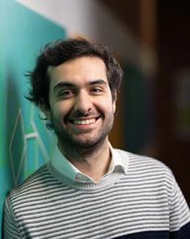
Cambyse Rouzé’s research focuses on the mathematical analysis of complex quantum systems and their applications to quantum information processing. His areas of expertise include quantum information theory with discrete- and continuous-variable systems, entropic inequalities, quantum spin systems at finite temperature, and dissipative dynamics. More recently, he has worked on questions related to the thermal stability of quantum memories and the complexity of quantum many-body states. He received his PhD in 2019 from the Department of Pure Mathematics and Mathematical Statistics at the University of Cambridge, UK, under the supervision of Nilanjana Datta. He subsequently held a Humboldt postdoctoral fellowship at the Technical University of Munich, in Robert König’s group, where he was awarded a grant from the Munich Center for Quantum Science and Technology as a junior group leader.
>> Cambyse Rouzé’s personal website
>> Cambyse Rouzé on Google Scholar
About Marc-Olivier Renou
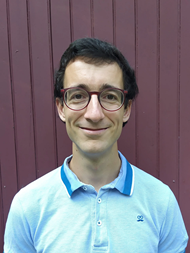
Marc-Olivier Renou is a theoretical researcher working in the field of quantum information science. His research focuses on quantum correlations, quantum networks, distributed quantum computing, device-independent quantum information processing, and noncommutative polynomial optimization for quantum mechanics. Since February 2023, Marc-Olivier Renou has held a Junior Professor Chair at INRIA Saclay, affiliated with the Centre for Theoretical Physics (CPHT) at École Polytechnique. He is also a co-founder of an INRIA project team working on quantum information theory at the interface between physics and computer science. Previously, Marc-Olivier Renou held a Marie Skłodowska-Curie fellowship from 2020 to January 2023, funded by Spain through the EU Recovery Fund, as well as an Early Postdoc.Mobility fellowship funded by Switzerland at the Institute of Photonic Sciences (ICFO) in Barcelona, in the quantum information theory group led by Antonio Acín. He spent an extended research stay at ETH Zürich during the summer of 2022, in the quantum information theory group led by Renato Renner. He completed his PhD between 2015 and 2019 under the supervision of Nicolas Gisin at the University of Geneva.
>> Marc-Olivier Renou’s personal website
>> Marc-Olivier Renou on Google Scholar
About Vicky Kalogeiton
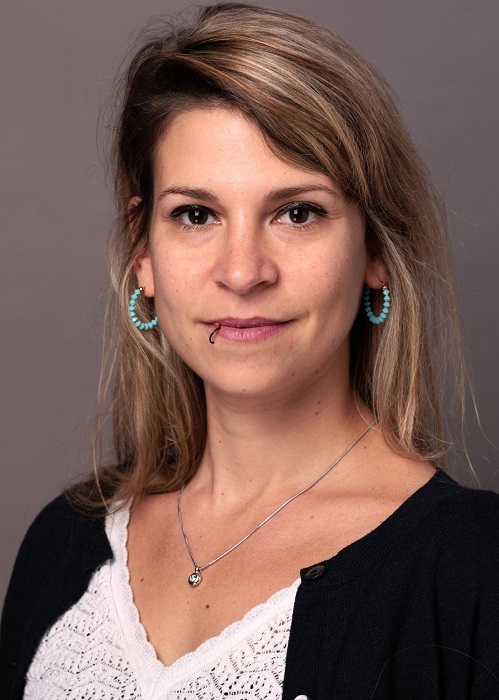
Vicky Kalogeiton is a professor at École Polytechnique and member of the Computer Science Laboratory of the École Polyechnique (LIX**). As an expert in computer vision and generative artificial intelligence, she develops models capable of analyzing, understanding, and generating images, videos, and other types of data. Vicky Kalogeiton also explores approaches to leveraging data more efficiently and cost-effectively. She has also focused on AI-driven video analysis and, for example, has trained algorithms to recognize complex situations such as humorous elements in movie or TV show scenes. Her work has applications in many fields: in creative fields, where her multimodal generative models are used to generate video or reproduce camera movements; in the medical field, where they can predict the risk of transplant rejection based on visual examinations; and in defense, where these techniques can contribute to the analysis of high-risk situations such as pilots fainting due to high acceleration.
>> Vicky Kalogeiton on Google Scholar
>> AI: Toward Ever More Efficient Image Generation
*LTCI: a research lab Télécom Paris, Institut Polytechnique de Paris, 91120 Palaiseau, France
** CPHT: a joint research unit CNRS, École Polytechnique, Institut Polytechnique de Paris, 91120 Palaiseau, France
*** LIX : CNRS, École polytechnique, Institut Polytechnique de Paris, Palaiseau, France