



Philippe Nghe: The power of RNA
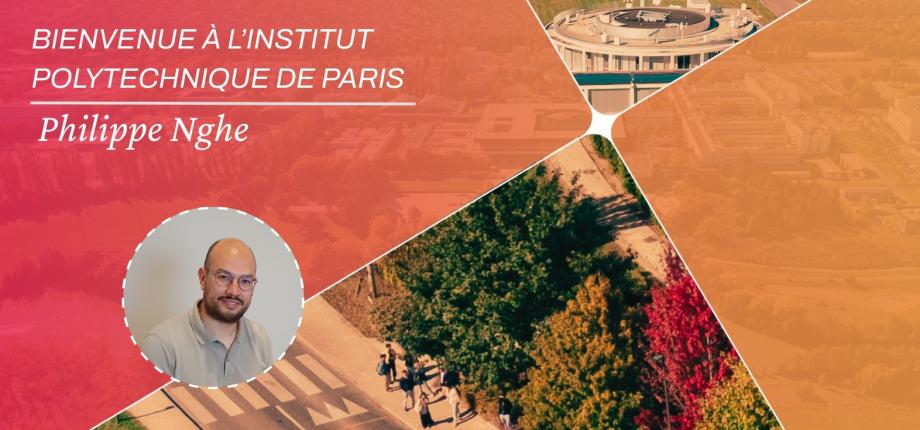
“The idea of explaining life through the prism of physics has always appealed to me. I focused my studies and career in this direction, at the interface between physics and biology,” says Philippe Nghe, professor at the Structural Biology of the Cell Laboratory (BIOC**) laboratory at École Polytechnique. In the mid-2000s, microfluidics made it possible to manipulate fluids at the cellular or multicellular level (on the order of microns or hundreds of microns). It was gaining momentum, and applications were emerging in biology. The student was intrigued. He embarked on a master's degree in fluid physics and soft matter at Sorbonne University, jointly accredited by École Polytechnique. Through meetings and discussions with his professors, Philippe Nghe was encouraged to pursue a thesis at ESPCI, as part of a contract with a major energy supplier. “I was attracted by the industrial opportunities offered by research and the possibility of continuing my work in microfluidics, particularly in porous media.”
Biology had taken a back seat, but that didn't matter. With his doctorate in hand, Philippe Nghe returned to biology and set himself the goal of conducting research in the public sector. “I wanted a subject that combined fundamental research and complexity. I wanted challenges.” It was in Amsterdam and at the Amolf Institute that the researcher found what he was looking for, conducting postdoctoral work on evolution. “It's hard to imagine anything more fundamental and challenging,” he jokes. For three years, Philippe Nghe's daily life consisted of biophysics and a highly quantitative approach to living organisms.
The origins of life... RNA?
Back in France, he joined Andrew Griffiths' team at the ESPCI. "I was returning to the place where I had done my thesis, but this time to study the origins of life. That's where I really combined microfluidics (which miniaturizes and recreates certain physiological phenomena in very small reactors such as drops) and fundamental biology, particularly with the analysis of single cells and in vitro biochemical reactions," recalls Philippe Nghe.
The researcher then explored the relationship between the genetic code carried by DNA, how it conditions functions, and the impact of these functions on evolution (and further downstream, on potential medical and industrial applications). He experimented in vitro, trapping various molecules in droplets acting as cells, units with chemical and biochemical reactions. “In these compartments, I was able to recreate rudimentary RNA reproduction dynamics, reflecting those of the origins of life. These experiments gave me a foothold in what I do today.”
Over time, Philippe Nghe secured international funding—notably from the Human Frontier Science Program (HFSP)—which gradually led him towards computational methods and the use of artificial intelligence. An ERC Consolidator Grant obtained in 2021 led him to the interface between AI and RNA to better understand the origins of life. By screening numerous physicochemical conditions in his “compartments,” Philippe Nghe gradually focused on this molecule that carries genetic information.
RNA could well be the link between an inert environment such as the primordial soup, composed of chemical elements or small molecules, and an evolutionary process leading to our ancestor cell LUCA (Last Universal Common Ancestor) and its 500 genes. Biochemistry has long shown that ribonucleic acid can both carry genetic information and produce proteins, but also trigger chemical reactions between RNAs. This would result in self-organization in which RNAs would promote their own production while catalyzing the formation of other functional molecules from random sequences available in the prebiotic environment. “I am interested in the hypothesis that primitive objects that do not have the ability to copy themselves base by base could evolve,” says Philippe Nghe.
Synthetic approach, AI, and therapeutic research
To verify this, and given that it is currently impossible to observe LUCA, researchers are adopting a synthetic approach with the help of AI. They develop scenarios that favored the emergence of the ancestor cell, test their feasibility in the laboratory, then map these conditions before comparing their compatibility with a given scenario. “In our case, algorithms help us generate our own RNAs and determine the functions they can perform: replicating themselves for research into the origins of life, or exhibiting therapeutic properties as part of work for the E4H interdisciplinary center.”
It is in this latter context that Philippe Nghe's Tenure Track project at IP Paris fits in. The researcher's goal is to develop artificial intelligence models that link RNA sequences to functions. "The Covid crisis has highlighted the therapeutic potential of ribonucleic acid and the possibility of developing drugs very quickly. A large part of the human genome is also transcribed into RNA, 80%, while only 2% is translated into protein according to current estimates. This molecule therefore has enormous potential as a therapeutic target," says Philippe Nghe enthusiastically.
By joining BIOC and, more broadly, the biology department at IP Paris, he can draw on an environment with expertise in artificial intelligence as well as research dedicated to nucleic acids. “We hope to gain a comprehensive understanding of what molecules do: from their sequence information and interactions to cellular states, as well as applications ranging from therapeutics to bioproduction,” concludes the researcher.
*As part of the STEP² project selected by the ANR during the call for projects “Excellence in all its forms” (EXES) France 2030
About Philippe Nghe
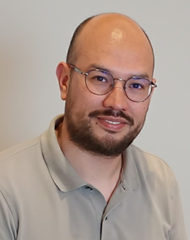
A former student of the École Polytechnique, after completing his thesis at ESPCI and a postdoctoral fellowship at AMOLF (Netherlands), Philippe Nghe was a lecturer at ESPCI Paris from 2013 to 2025. There, he headed the Biophysics and Evolution Laboratory team within the Chemistry Biology Innovation joint research unit (CNRS-ESPCI). Trained as a physicist and biologist, his expertise lies at the interface between physics and biology, with a particular focus on microfluidics, the origin of life, and systems biology. In particular, he develops high-throughput experimental technologies coupled with theoretical models to study autocatalytic chemical reaction networks and bacterial evolution. He is currently continuing his work as a professor at the Structural Biology of the Cell Laboratory (BIOC) at École Polytechnique.
>> Philippe Nghe on Google Scholar
**BIOC: a joint research unit CNRS, École Polytechnique, Institut Polytechnique de Paris, 91120 Palaiseau, France