



[REFLEXIONS] Breaking down the barriers to energy sustainability
Decarbonising the energy sector won’t suffice. To achieve a sustainable energy transition, the issues related to resources and the environmental impacts caused by changes in energy production and use also need to be tackled.
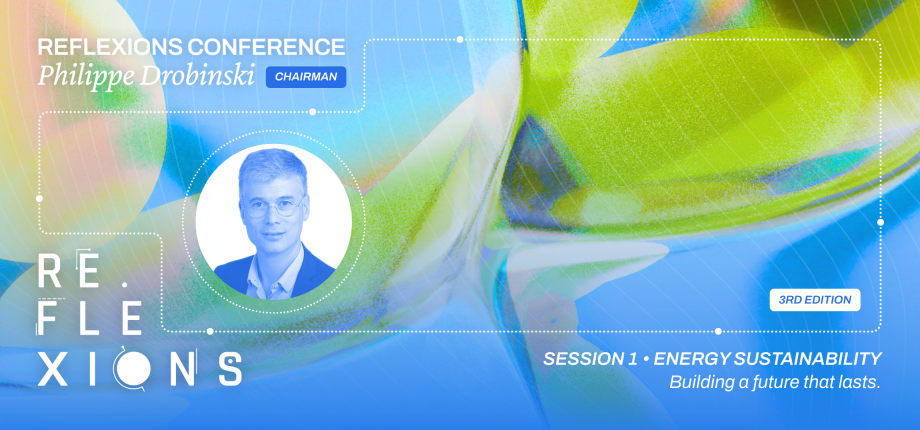
The energy transition aims first and foremost to address a major problem: 75% of greenhouse gas emissions are linked to energy – its production and use. “Decarbonisation is a necessary and essential first step towards sustainability, but it is not enough. We must also ensure that the externalities of decarbonisation, that is its socioeconomic and environmental impacts, are sustainable. So how do we achieve this transition?” notes Philippe Drobinski, CNRS Director of Research at the Dynamic Meteorology Laboratory (LMD*) and Professor at the École Polytechnique. The climatologist, who is also director of the Energy4Climate (E4C) interdisciplinary centre launched in 2019 by the Institut Polytechnique de Paris and the École nationale des ponts et chaussées, will provide an answer to this crucial question during the first of three round tables at the Reflexions Conference organised by the Institut Polytechnique Paris on February 5th.
Bringing together leading scientific, industrial and political experts in the field of energy, the third edition of Réflexions aims to explore the interconnections between the technological, economic, environmental and societal dimensions of the energy transition around three themes: sustainability, security and energy justice.
Long-term viability of energy systems
The first part of the conference will therefore focus on energy sustainability, generally understood as the ability of an energy system to continue operating while limiting its environmental impact.
Energy decarbonisation aims to reduce greenhouse gas emissions by replacing fossil fuels with renewable energy sources, while increasing energy efficiency and system’s sufficiency. “It may sound simple, but there are many obstacles to overcome,” warns Philippe Drobinski. “When you install a field of photovoltaic panels on the ground, for example, you sometimes have to clear the land. So there is a footprint on the ground and possibly an impact on biodiversity...”
Similarly, should land be used for photovoltaic panels to produce renewable energy, or should it be left for agriculture to feed the population? One of the solutions being worked on by scientists at IP Paris, including Philippe Drobinski’s team, is agrivoltaics. They have demonstrated that, in the arid climates of the Mediterranean region, photovoltaic panels placed in the middle of crops can protect them and optimise the use of water resources.
High-impact solutions
Furthermore, replacing a fossil fuel-based energy system with a carbon-free system poses countless challenges related to materials, resource sustainability and sustainable supply chains, which are at the heart of the work of researchers from the I3-CRG** laboratory at École Polytechnique and Télécom Paris.
In this regard, the need for electric mobility illustrates the obstacles to be overcome in terms of material stocks and flows: with car batteries needing to be replaced every five years, the quantities of materials required are staggering... A challenge that is being addressed by François Ozanam's teams at the Laboratory of Condensed Matter for Physics (PMC***) at École Polytechnique.
Despite all the obstacles, Philippe Drobinski remains optimistic: “Even though there are many challenges to achieving energy sustainability, the good news is that this is probably the sector for which we have the most solutions, which also have the potential for large-scale impact”.
A video recap of the [REFLEXIONS] 2026 conference
*LMD: a joint research unit CNRS, ENS - PSL, Sorbonne Université, École Polytechnique, Institut Polytechnique de Paris, 91120 Palaiseau, France
**I³-CRG: a joint research unit CNRS, Mines Paris - PSL, Télécom Paris, École Polytechnique, Institut Polytechnique de Paris, 91120 Palaiseau, France
*** PMC: a joint research unit CNRS, École Polytechnique, Institut Polytechnique de Paris, 91120 Palaiseau, France
About Philippe Drobinski
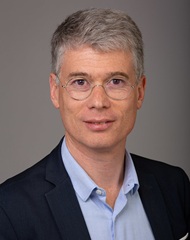
Philippe Drobinski is a research director at the CNRS and a professor at École Polytechnique. He conducts in-depth research on climate variability and change in the Euro-Mediterranean region, with a particular focus on the challenges associated with climate change and energy transition. As founding director of the interdisciplinary Energy4Climate center, he coordinates initiatives aimed at promoting innovative solutions to climate and energy transition challenges in collaboration with socio-economic and institutional actors. Philippe Drobinski also contributes as a lead author to the IPCC's 7th Assessment Report and as coordinator of the MedECC's second assessment report, at the heart of his commitment to disseminating climate and energy issues to decision-makers.