



Institut Polytechnique de Paris accelerates its development and unveils its new strategic roadmap
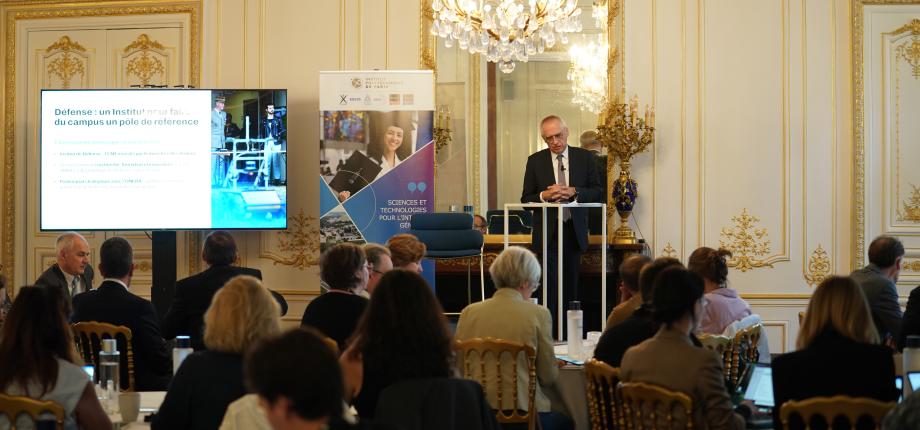
Building on the strengths of its six member schools and the momentum generated since its creation, Institut Polytechnique de Paris is taking a new step in its development. Bringing together Ecole Polytechnique, ENSTA, École nationale des ponts et chaussées, ENSAE Paris, Télécom Paris and Télécom SudParis, IP Paris is strengthening its ambitions around major scientific and technological challenges at the forefront of public debate: defence and sovereignty, the environmental and energy transitions, artificial intelligence and disruptive technologies.
In the face of growing international competition, IP Paris is pursuing three avenues: transforming its campus to support its scientific priorities; investing in high-risk research and disruptive innovation; and strengthening its ability to attract talent, with a deeper European presence and new cooperation priorities in Asia.
“In just a few years, we have made IP Paris a science and technology institution recognised among the world's leaders. Faced with the major challenges of our time, we have a responsibility to mobilise the full strength of our scientific community to generate knowledge and solutions that meet society's needs,” said Thierry Coulhon, President of IP Paris.
A campus undergoing major transformation to expand IP Paris's scientific capacity
In Palaiseau, the IP Paris campus is undergoing significant transformation, with numerous construction projects improving facilities and campus life. It also benefits from the wider development of Paris-Saclay, including the arrival of metro line 18, the Paris-Saclay 2035 initiative and the ambitions of the regional government. IP Paris's model also draws on complementary sites in Évry, Champs-sur-Marne and Brest, close to the expertise and local communities of its schools. The aim is to create an environment capable of attracting and retaining top talent and strengthening the Institute's academic and scientific competitiveness.
Defence and sovereignty: a new centre of excellence on campus
Defence and sovereignty are part of IP Paris's DNA: two of its schools, École polytechnique and ENSTA, fall under the supervision of the French Ministry of the Armed Forces.
In March 2025, the Ministry announced a significant expansion of its activities on campus. The research division of the Ministry's Defence Artificial Intelligence Agency (AMIAD), inaugurated on March 4, 2025 at Ecole Polytechnique's X-Novation Center, strengthens the defence research ecosystem and cooperation with IP Paris.
This momentum will continue with the creation of a Defence Institute on the Ecole Polytechnique campus, with €15 million in construction funding from the Ministry of the Armed Forces. Dedicated to defence and security, it will bring together research, education and innovation. It will house, among others, AMIAD's research division, IP Paris's Interdisciplinary Centre for Defence and Security Studies (CIEDS), the Defence Innovation Agency's Quantum Defence Lab and cybersecurity teams, with staffing expected to grow gradually through 2030.
Designed as a flagship hub for defence innovation, the Defence Institute will connect IP Paris, the Ministry of the Armed Forces, the Directorate General of Armaments (DGA), the Defence Innovation Agency (AID) and the many defence companies with which IP Paris already works, strengthening collaboration between research, education and industry.
This transformation responds to France's growing need for highly skilled engineers and scientific expertise and forms part of the expansion of relevant education and research activities.
Examples include:
• At Ecole Polytechnique, all students in the engineering programme have taken a compulsory course on defence and sovereignty since this year. A bachelor's degree in cybersecurity and cyberdefence was also developed in 2024 by EPITA, the Ministry of the Armed Forces and École polytechnique. Its cohort has more than 100 students, including 30 with military status.
• ENSTA and ISAE-SUPAERO launched a Defence and Security engineering programme in autumn 2026, the first of its kind in France. It prepares engineers to design and manage major defence systems, from cybersecurity and AI to naval, aerospace and aviation applications. Nearly 100 civilian and military students are enrolled.
• At Télécom SudParis, a Defence and Digital Sovereignty track has enhanced the school's digital engineering curriculum since autumn 2026. Created as part of a strategic partnership with the Directorate General of Armaments (DGA), it introduces future engineers to the geopolitical, economic and technological dimensions of national defence.
• The Complex Systems Architecture (ASC) Chair, jointly led by Ecole Polytechnique, ENSTA, Télécom Paris and Télécom SudParis, is expanding and now contributes to programmes at all four schools, from bachelor's and master's degrees to engineering curricula. Its courses cover AI, robotics, software and systems verification, control and embedded systems, with up to around 50 students per course.
Robotics: a new area of excellence for IP Paris
IP Paris intends to make robotics an area of excellence by drawing on its schools' expertise, from fundamental research to experimental platforms. The Institute already has a critical mass of 51 faculty researchers working across robotics and AI, embedded systems, computer vision, trustworthy AI and multi-robot systems.
Robotics applications span defence, maritime activities, industry and construction. This work draws in particular on the Defence Robotics and Artificial Intelligence Laboratory (LARIAD), a joint ENSTA–AMIAD laboratory devoted to defence robotics, and on advanced facilities at ENSTA: an air–sea experimental basin at its Brest campus and a planned drone arena at Palaiseau. Supported by the Île-de-France Region, the latter is intended to become one of Europe's largest drone flight-testing facilities.
A partnership with ONERA, the French aerospace research centre, formalised in December 2025, will consolidate this ecosystem with a new building dedicated to aerodynamics, aeroelasticity and acoustics near the IP Paris mechanics hub inaugurated in 2024. In the longer term, IP Paris is considering bringing these capabilities together in a Robotics Institute or Centre with European and international ambitions.
Climate, energy and transitions: from research to experimentation
Alongside defence, the campus transformation supports research on climate and the environmental and energy transitions through new dedicated facilities and capabilities.
The campus itself is becoming a scientific testbed for the environmental transition, where climate mitigation and adaptation solutions can be tested under real conditions before wider deployment.
It is intended to become an open-air laboratory for decarbonisation solutions: energy generation and storage, smart grids, low-carbon buildings, agrivoltaics, and CO₂ capture and utilisation.
Several demonstrators on the Ecole Polytechnique campus already illustrate this ambition. AXEN is testing a model targeting a 60% reduction in energy consumption and an 80% reduction in CO₂ emissions. XSeaO2 explores the use of CO₂ dissolved in seawater to produce non-fossil synthetic fuels. These École polytechnique demonstrators were made possible in part by an exceptional donation from Agnès and Stéphane Ifker (École polytechnique class of 1993) to the Ecole Polytechnique Foundation.
Smart Garden, developed at Télécom Paris, aims to tackle urban heat islands using highly energy-efficient connected devices that manage their consumption while generating or harvesting their own energy.
The building programme supports this ambition, notably through Rénov'X, the major renovation of Ecole Polytechnique's central building and research laboratories, and the arrival of École nationale des ponts et chaussées (ENPC) in the future “Le Central” building. By 2029, this building will accommodate research and teaching activities, with 170 workstations and capacity for nearly 350 students at one time. ENPC's presence in Palaiseau will strengthen scientific synergies around adaptation and mitigation, including resilient cities, sustainable mobility, water, CO₂ and hydrogen storage, materials, infrastructure and nature-based solutions.
IP Paris is also working with CEA (the French Alternative Energies and Atomic Energy Commission) and IFPEN (IFP Energies nouvelles) to create an Institute for Electrification Technologies. ENPC would play a central role, drawing on its expertise in almost all identified priority areas and on its Co-Innovation Lab (CIL), which brings academic and industry teams together to speed the transfer of research to industry. Under the proposed governance arrangements, ENPC would lead collaborative projects in accordance with the principle of subsidiarity. The project could also draw on Télécom Paris's expertise in energy systems security.
Through this Institute, IP Paris aims to organise the progression from research to experimentation and then to industrial application. This will include the launch of new educational programmes.
New infrastructure for fundamental research
Applied research and disruptive innovation depend on fundamental research. The campus transformation includes significant investment in scientific infrastructure in a field where IP Paris has established strengths.
Announced in summer 2026, Ecole Polytechnique's new Institute of Mathematics and Fundamental Sciences is intended to benefit the wider IP Paris academic community and beyond. Made possible by Bernard Arnault's commitment, it will be established in the heart of the Palaiseau campus by 2030 as a French centre of excellence and a meeting place for the international research community, where mathematicians, physicists, computer scientists and students will work together on scientific and societal challenges.
A new physics building will bring together teams from the Laboratory of Interface Physics and Thin Films (LPICM) and the Leprince-Ringuet Laboratory (LLR), both joint research units of Ecole Polytechnique and CNRS. Scheduled for completion in early 2028 on the Ecole Polytechnique campus, it will give researchers spaces suited to work spanning fundamental research and its applications.
These new facilities are accompanied by stronger scientific partnerships with CNRS (the French National Centre for Scientific Research) and Inria, which play a central role in the IP Paris research ecosystem.
High-risk research and disruptive innovation: IP Paris increases investment
IP Paris is choosing to invest over the long term and give researchers more resources to explore bold ideas whose results, and even feasibility, remain uncertain.
This policy supports high-potential research that struggles to find a place in conventional funding schemes but may lead to genuine scientific breakthroughs.
FRONTIERS: €2.25 million committed to scientific risk-taking
Through FRONTIERS, its new programme launched in 2026, IP Paris is increasing support for exploratory research and projects with strong scientific potential. It enables researchers to investigate paradigm shifts, new methods and emerging interdisciplinary approaches, making room for the scientific risk-taking needed to develop tomorrow's ideas and research fields.
For the first call, €2.25 million has been committed: 15 projects were selected from 72 proposals, each receiving €150,000 for up to 48 months.
Biology, physics, mathematics, AI, economics, materials and social sciences: the projects cover a wide range of fields and bring together IP Paris's schools. Selected topics include laser cooling of two-dimensional materials, new quantum systems, architected materials for extreme conditions, AI applied to geofinance and new approaches in cell biology.
The aim is also to create a multiplier effect: the most promising projects will receive support in applying for larger French and European grants, including France 2030 and European Research Council (ERC) funding.
From laboratories to startups: accelerating disruptive innovation
IP Paris aims to strengthen the pathway from research to innovation, engaging with researchers and doctoral students earlier to accelerate the transformation of scientific discoveries into disruptive innovations.
The Institute is increasing its support for research-based innovation, particularly work that could become high-impact technologies, products and businesses. This innovation model rests on high-level fundamental research.
With 45 laboratories, IP Paris has considerable scientific potential. The challenge is to identify emerging innovations more effectively and accelerate their development and commercialisation.
The IP Paris Innovation Lab acts as a catalyst, identifying and supporting high-potential innovative projects. Since its creation in 2025, the number of projects identified has risen by 40%.
IP Paris is expanding early-stage development, a key step in turning scientific results into initial proofs of concept. It now invests nearly €1 million a year to develop proofs of concept for 10 to 15 emerging deep-tech projects. This funding will increase further thanks to the A2-Line project, undertaken with the technology transfer company SATT and Université Paris-Saclay and supported by the Île-de-France Region.
A new call for projects aimed at doctoral students enables IP Paris to act earlier and raise young researchers' awareness of the potential to translate their work into applications and of its scientific, technological, economic and societal impact.
This policy draws on an entire innovation chain, from prototyping to company creation. Five incubators and seed funds such as Polytechnique Ventures help support more than 120 startups each year and bring new high-impact businesses into being.
Examples such as Plasana Medical, Allivia, Shiftelec and Morpho illustrate this journey: research, early-stage development, proof of concept, then technology transfer or company creation.
Attracting top talent amid growing international competition
Amid intensifying global scientific and technological competition, IP Paris is strengthening its international strategy to increase its appeal and visibility among the world's leading science and technology institutions.
The aim is to focus on partnerships that can produce lasting, tangible scientific collaborations. This policy has three goals: attracting outstanding international students and researchers, developing high-impact cooperation, and strengthening IP Paris's position in major global academic networks.
Europe: turning alliances into tangible scientific cooperation
Working at European scale is essential to reach critical mass in global scientific competition. IP Paris aims to turn alliances with leading European universities into concrete scientific collaborations capable of producing tomorrow's strategic technologies and attracting and retaining top talent in Europe.
IP Paris's presidency of EuroTech in 2026 is a major driver of this ambition. It comes alongside the launch of the EuroTech 2030 strategy, presented in March 2026 and subsequently promoted to European institutions in Brussels.
The goal is to make EuroTech cooperation more operational by connecting researchers, forming consortia, developing European project proposals, sharing access to research infrastructure and creating joint programmes. Several initiatives are already under way: a Visiting Researchers Programme offering one- to two-week research stays at another member university, and support for IP Paris researchers preparing European proposals, notably under Horizon Europe.
The alliance, which currently has six founding members, will welcome two additional members this year: CTU (Prague) and TalTech (Tallinn).
Cooperation focuses on four strategic technology areas for Europe: AI for robotics; energy systems; semiconductors, photonics and quantum technologies; and biotechnology.
In parallel, IP Paris is developing targeted partnerships with leading European institutions, notably KTH Royal Institute of Technology in Sweden. Initiated in 2025, this partnership covers AI, the digital and environmental transitions, innovation and strategic technologies, with the ambition of building a strong Franco-Swedish scientific axis. Another initiative is the AI Corridor with Oxford and Cambridge, designed with HEC Paris as a world-class scientific hub for high-performance, resource-efficient and trustworthy AI.
IP Paris also participates in the European Engineering Learning Innovation and Science Alliance (EELISA) through École nationale des ponts et chaussées. Supported by the European Commission, it aims in particular to develop new educational programmes, facilitate mobility and advance the European model of engineering education.
“In the face of global technological competition, Europe must work at scale to reach critical mass. We want to turn our alliances into concrete scientific collaborations, retain talent in Europe, translate more discoveries into innovations and new businesses, and above all preserve Europe's ability to make its own technological choices,” said Thierry Coulhon.
Expanding cooperation in Asia
A stronger European presence goes hand in hand with renewed engagement with the rest of the world.
In Asia, India is an important partner, with growing cooperation in research, education and innovation, particularly AI. IP Paris played a leading role in the university and scientific meetings at the India AI Impact Summit 2026. This momentum also draws on partnerships with major institutions, including the Indian Institute of Technology Delhi (IIT Delhi), with which École polytechnique and Télécom Paris are developing cooperation on AI, research and talent mobility.
In Japan, ties are being strengthened with the University of Tokyo, Institute of Science Tokyo and RIKEN-AIP through partnerships due to be signed in October 2026. Research and educational collaborations with Seoul National University (SNU) and Yonsei University in South Korea will also be formalised this autumn.
Beyond institutional agreements, IP Paris wants to make partnerships more useful to researchers in practice. Seed funding helps launch joint scientific projects before they grow to a larger scale: 15 projects have received support this year.
Educating and attracting talent to meet major scientific and technological changes
The ability to educate and attract outstanding students and researchers is another driver of IP Paris's development. International students make up 43% of its student body, reflecting the appeal of its programmes and research environment.
Teaching the strategic skills of tomorrow
IP Paris aims to educate the engineers, scientists and decision-makers that France and Europe need, and its programmes are becoming more attractive. At the start of this academic year, for example, its master's programmes and PhD Tracks have 1,280 students, up 15.5% year on year and 68% since 2021.
Programmes must also adapt to emerging needs and strategic skills. Artificial intelligence is a prime example: IP Paris has substantially expanded its offering with funding obtained through the AI Cluster initiative (France 2030). In 2026, more than 1,300 students will graduate from an AI programme, 40% more than in 2023.
IP Paris now offers 24 AI programmes, including 10 created since 2023 within Hi! PARIS, co-founded with HEC Paris. Crucially, every student at its schools now takes at least one course in applied AI.
At the start of the 2026 academic year, Télécom SudParis is launching a new AI certificate integrated into its engineering curriculum. It aims to educate engineers who can understand the foundations of AI, design and improve models, and master their ethical and environmental implications, rather than simply use AI tools.
The Master of Science and Technology (MSc&T) programmes ‘Large Language Models, Graphs and Applications’ (LLGA) at École polytechnique and ‘AI for Markets and Quantitative Investment’ (MaQI), launched by ENSAE Paris and École polytechnique, also illustrate the growth of programmes at the intersection of AI and other disciplines.
Broadening pathways to excellence
Discussing talent also means addressing diversity and the ability of IP Paris and its member schools to enable young people, whatever their background or gender, to access opportunities for excellence.
Two approaches are central. The first is to broaden access to outstanding programmes. The multidisciplinary Paris-Saclay undergraduate programme (CPES), to which IP Paris contributes, is one example: 33 students in its first graduating class this summer have progressed to highly selective programmes in France and abroad, including at Ecole Polytechnique, Télécom Paris, HEC Paris, CentraleSupélec and KTH. These outcomes show the programme's ability to prepare students for top-level study in France and internationally.
The second approach is to use research, particularly in the economics of education, to advance equal opportunity and better understand the factors that still steer some young people, especially young women, away from scientific fields. The Equal Opportunities Observatory, launched with the Écoles normales supérieures last December, will use long-term data to document these patterns; one of its first outputs will address women's participation in science. OrienteXpress, a research project led by Guillaume Hollard, a CNRS research director, professor at École polytechnique and researcher at CREST (a joint École polytechnique–ENSAE–CNRS research unit), aims to improve young people's guidance towards science. The project is supported by the Ecole Polytechnique Foundation.
Attracting and retaining researchers amid international competition
In a highly competitive international environment, IP Paris is strengthening its ability to attract and retain international researchers and faculty members, who already account for 43% of its academic staff.
Several measures are in place. At École polytechnique, the Gaspard Monge Visiting Professor programme welcomes outstanding researchers from around the world for four to twelve months each year. Hi! PARIS has also expanded substantially: since 2024, it has recruited 11 external chairholders and 11 additional faculty researchers, and funded 50 doctoral students and 75 postdoctoral researchers. Alongside existing measures, IP Paris has tasked Jérôme Lesueur, Deputy Director of École nationale des ponts et chaussées, with developing an Institute-wide talent attraction policy.
Retaining existing researchers also means giving them the resources to develop their work. Twenty-one internal chairs have been created, notably through funding from the Hi! PARIS centre.
Access to European funding is another major tool: IP Paris researchers won 10% of the ERC Starting Grants awarded in France in 2025. IP Paris intends to strengthen its support for these applications, with a dedicated provision in its next objectives and performance agreement.
2026–2027: IP Paris prepares for a new institutional phase
The 2026–2027 period will also bring three important institutional milestones for IP Paris:
• The appointment in autumn 2026 of a Chair of the Board of Directors shared with Ecole Polytechnique. This will conclude the governance reform process begun in September 2023.
• The preparation of an objectives and performance agreement between IP Paris and its two supervising ministries, covering 2027–2031 and expected to be signed in December 2026.
• The transition of IP Paris to the French status of grand établissement following its experimental period, in early 2027. The HCÉRES evaluation committee issued a favourable opinion on 7 September 2026.
These milestones mark a decisive step in IP Paris's development: six years after its creation, the Institute is entering a phase in which its model, scientific capabilities and alliances can realise their full potential.