



Statistical Physics Serving the Life Sciences: The Innovative Research of Ruben Zakine

“Statistical physics concerns neither the infinitely small nor the infinitely large, but the infinitely numerous.” This is how Ruben Zakine, a researcher at LadHyX, defines his playground. “As soon as a system is made up of a very large number of interacting elements, statistical physics describes what they converge toward and the macroscopic effects that result from their behavior,” he explains. A distinctive feature of this field is that the term “entity” encompasses an infinite range of notions: atoms, molecules, polymers, etc. For about twenty years, it has even been used to describe interacting living particles such as bacteria in a colony, cells in epithelial tissue, fish in a school, or birds flying in flocks. The objective is then to describe the phase or state transitions these systems undergo and to predict their evolution.
The context is set. Back to Ruben Zakine. It was in ninth grade, while reading an issue of Sciences & Vie about particle physics, that the future researcher had his breakthrough moment and chose to pursue a scientific path. After high school, he joined École Polytechnique and studied particle physics. He then moved toward a master’s degree in biophysics, which he found more engaging. “I was fortunate to continue with a PhD in statistical physics, soft matter, and living systems at Paris Diderot University (now Paris Cité).”
Bacteria, Economics… As Long as There Are Interactions
Ruben Zakine then sought to understand and model the behavior of interacting membrane proteins. He also began working on self-propelled particles—those with their own motion—such as bacteria equipped with a flagellum or certain synthetic droplets. “These objects have the peculiar property of clustering due to a traffic-jam effect, without any attractive interaction—just the combined effect of repulsion and self-propulsion. This is quite disorienting for scientists trained in equilibrium statistical physics.”
During his first postdoctoral position at New York University (NYU), specifically at the Center for Applied Mathematics and the Soft Matter Research Center, he was able to better formalize phase transitions in systems involving such particles. “Changes of state are difficult to describe because the system evolves over time, reorganizes itself, and dissipates energy. It creates entropy. In other words, the dynamics are irreversible and behaviors are harder to predict than for systems at thermodynamic equilibrium.”
Building on this experience, the young researcher returned to France and began a new postdoctoral position in 2022. He temporarily set aside droplets and microorganisms to focus on economics. At LadHyX, within the framework of the Econophysics and Complex Systems chair (EconophysiX Lab), he conducted his research. “The link between statistical physics and economics had interested me for a long time. Economic systems are inherently far from equilibrium. The transition from one stable state to another occurs through crises. I wanted to use the tools developed at NYU to study and better anticipate them.”
Thus, Ruben Zakine attempted to understand how traders, who never operate in isolation, influence stock values on financial markets. He also examined socioeconomic systems such as cities, where individuals are always influenced by others in their decision-making. “With statistical physics, the complexity of the world is no longer represented by a single model individual, but by large groups of interacting agents,” he emphasizes.
Putting Systems into Equations
Today, Ruben Zakine holds a faculty position supported by the interdisciplinary center E4H as part of the IP Paris Tenure Track program**. Still at LadHyX, he has returned to biophysics and is once again studying the behavior of bacteria and self-propelled particles. “This time, I no longer consider them in passive environments but in living and fluctuating settings, such as blood vessels or intestines.” He is also focusing on ecosystems—particularly bacterial ones—and on understanding the phenomena at play when thousands of species interact across different scales (in soils, the ocean, the gut microbiome, etc.).
His goal is to describe, within a given system, the interactions between individuals using equations. Then, by zooming out, to understand how the system as a whole evolves and to characterize it as well through an equation. “The starting point of my work is often a biophysical experiment. To isolate a specific observable phenomenon that interests me and that I want to understand in detail, I rely on two approaches. On the one hand, I make predictions by hand about the macroscopic evolution of the system (using analytical calculation techniques, statistical physics, and starting from individual dynamics). On the other hand, I use numerical simulations that encode the behavior of each entity. If the simulation of the interacting entities’ behavior matches my calculations, then the description is correct. And if an experiment confirms it as well, that’s the holy grail,” the physicist jokes.
Although theoretical, Ruben Zakine’s work opens up many perspectives. In medicine, for instance, where the evolution of a tumor can be predicted by deciphering the interactions between the cancer cells that compose it. In biology as well, where studying bacterial colonies sheds light on microorganism locomotion and the conditions required for biofilm formation—an asset in understanding antibiotic resistance.
“This discipline—and this Tenure Track—gives me the opportunity to work at the interface of many fields, which has always attracted me. I collaborate with high-level researchers and motivated students. It is particularly stimulating and exciting,” concludes the researcher.
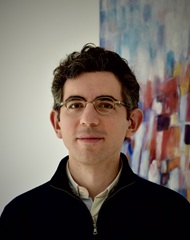
About Ruben Zakine
Ruben Zakine joined École Polytechnique in 2012. After completing a master’s degree in quantum physics, he went on to pursue a PhD in statistical physics, where he focused on emergent collective effects in active matter. He then carried out a first postdoctoral position at New York University (NYU), followed by a second at the Hydrodynamics Laboratory of École Polytechnique (LadHyX) and at the EconophysiX Lab. Since September 2025, he has been serving as an associate professor at LadHyX.
*LadHyX: CNRS, École polytechnique, Institut Polytechnique de Paris, Palaiseau, France
*As part of the STEP² project selected by the French National Research Agency (ANR) under the “Excellence in All Its Forms” (EXES) France 2030 call for projects (ANR-22-EXES-0013)