



The Institut Polytechnique de Paris Awards Its 2026 Thesis Prizes
Ten doctoral students distinguished themselves this year at the IP Paris Thesis Awards. Eight of them received the IP Paris Department Award for Best Thesis and were each awarded a prize of €3,000. The Grand Prize for Thesis, worth €5,000, was awarded to Manon Thbaut (Department of Engineering, Mechanics, and Energy) and Emmanuel Kammerer (Department of Mathematics).
Award winners in 2026
IP PARIS BEST THESIS AWARD
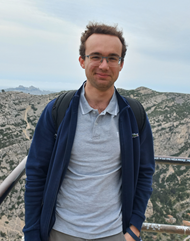
Emmanuel Kammerer, Department of Mathematics, from Center for Applied Mathematics (CMAP)
Thesis title: On random 3/2-stable maps
Emmanuel Kammerer’s research lies within a branch of probability theory often referred to as random geometry. Its aim is to describe the shape of randomly constructed networks, known as random maps, and to characterize their continuous limits using mathematical objects. Although highly fundamental, this work is also motivated by theoretical physics. Another part of his research focuses on models of tree-like structures, called random trees, which can be used to model phenomena such as the spread of rumors or epidemics.
Everything starts from a graph drawn on a surface. It is represented by a set of points connected by edges that never intersect. “The most intuitive analogy is that of a geographical map, where edges correspond to borders and vertices are the points at their intersections,” explains the former PhD student from the Center for Applied Mathematics at École polytechnique. At a small scale, the structure appears disordered. Yet, when the number of points becomes very large, a global structure emerges.
This is precisely the central challenge of Emmanuel Kammerer’s thesis: to describe this structure. To do so, the young researcher investigated the notion of distance within these mathematical objects: how many connections must be traversed to go from one point to another when they are chosen at random? As the network grows, how does this distance evolve?
To answer these questions, he developed mathematical tools capable of capturing the behavior of highly heterogeneous networks, where some points play a central role, much like large hubs. “These points are highly connected to other vertices. They create shortcuts in the geometry of the map and make it very different from the objects we usually encounter,” explains the researcher. Despite their random nature, these particular structures (stable 3/2 maps) obey universal laws that appear in many different contexts.
Beyond mathematics, Emmanuel Kammerer’s work also establishes predictions stemming from theoretical physics. “Stable 3/2 maps are notably related to Liouville quantum gravity, a theory describing geometry on a continuous space whose structure is random and highly irregular.” Returning to the geographical analogy, these spaces can be compared to a crumpled road map, full of irregularities. Kammerer’s models, made up of points and connections, represent these rough features. They make it possible to approximate continuous geometries with great precision and to better understand how spatial forms can emerge from simple rules.
Another part of his work concerns random tree structures known as random trees. Together with other researchers (Etienne Bellin, Arthur Blanc-Renaudie, Igor Kortchemski), he introduced a model of random trees that grow progressively, with stages in which a new vertex randomly connects to an existing one, and so-called freezing stages where an existing vertex is randomly selected and new vertices can no longer attach to it.
This work also sheds light on issues related to the spread of network-based phenomena such as rumors or epidemics. “We were able to determine the longest infection chain in a simple epidemiological model,” explains Emmanuel Kammerer. Although fundamental, this research could offer a new perspective for understanding, for instance, how to stop the spread of a computer virus.
*CMAP : a joint research unit CNRS, Inria, École Polytechnique, Institut Polytechnique de Paris, 91120 Palaiseau, France
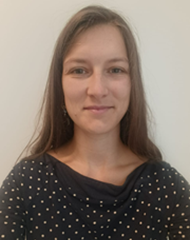
Manon Thbaut, Department of Mechanical Science and Engineering, from Solids Mechanics Laboratory (LMS)
Thesis title : A variational approach to higher-order homogenization
Manon Thbaut’s thesis takes us to the heart of solid mechanics. The young researcher devoted her PhD to the way a specific category of materials—architected materials—can be modeled. “Let’s imagine a sample. When observed from afar, it looks like a continuous plate. Up close, it is organized into many small, identical, repeated cells—here, for example, with a hexagonal shape,” she explains.
*LMS : a joint research unit CNRS, École Polytechnique, Institut Polytechnique de Paris, 91120 Palaiseau, France
DEPARTMENT BEST PHD THESIS AWARD
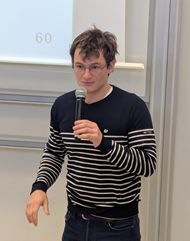
Julien Béguinot, Department of Information, Communication and Electronics, from Information Processing and Communications Laboratory (LTCI)
Thesis title: Evaluation of Information Leakage in Side Channels
A simple blinking LED… and a secret key is revealed. In some electronic systems, tiny variations in light intensity can be enough to compromise information that is supposed to remain secure. This is the type of vulnerability that Julien Beguinot investigated during his PhD. His research focuses on the information that encryption devices unintentionally leak while they are operating.
Today, the security of these systems often relies on empirical testing, in which laboratories reproduce the most sophisticated known attacks. If the attacks fail, the device is considered secure. "This approach remains fragile because it does not prove that the system is secure—it simply shows that a particular attack did not succeed at a given point in time," explains the researcher.
In practice, any device that processes data consumes power, emits signals, and interacts with its environment. These seemingly harmless physical phenomena can become valuable clues for an attacker. They are known as side channels.
To better understand these phenomena, Julien Beguinot relies on publicly available experimental measurements. "For example, if you measure the instantaneous power consumption of a circuit while it encrypts data, repeating the experiment makes it possible to identify variations—even very small ones—that depend on the secret key." The key question is therefore to determine how strongly the physical state of the system depends on that secret key. "If two different keys produce exactly the same physical behaviour, no information is leaked. But as soon as a difference appears, it can potentially be exploited by an attacker."
These observations are only the starting point of Julien Beguinot's research. Building on them, he applies Claude Shannon's information theory to quantify precisely what an adversary could infer about the secret key by observing the system. "Using statistical estimation methods, I establish mathematical bounds. In other words, I quantify the amount of information leaked by the device and, consequently, estimate the time and/or the number of measurements required to extract hidden information and successfully carry out an attack. This makes it possible to adjust the system's level of protection accordingly and determine its vulnerability threshold," he explains.
Julien Beguinot's work therefore bridges two worlds. On one side are theoretical tools that provide impossibility results—"they demonstrate that, regardless of the attack strategy, it is impossible to exceed a given success threshold under specific mathematical assumptions." On the other are everyday devices, such as connected objects and embedded systems, where detectable physical information leakage can occur.
The methods developed by the researcher could be applied to the evaluation standards used by organisations such as the French Information Technology Security Evaluation Facilities (CESTI), whose role is to assess products before they reach the market. "This represents a paradigm shift. Instead of simply being subjected to attacks, manufacturers can decide the desired security level of their devices—for example, by making attacks significantly more time-consuming."
These findings are also of interest to standardisation and cybersecurity agencies such as ANSSI in France, NIST in the United States, and the Common Criteria framework established by the European Union. They pave the way for the development of security standards that can be applied across the industry.
Today, Julien Beguinot is a postdoctoral researcher at UCLouvain in Belgium. He continues his work at the intersection of theory and practice, focusing on the design of algorithms and new protection strategies
*LTCI: a research lab Télécom Paris, Institut Polytechnique de Paris, 91120 Palaiseau, France
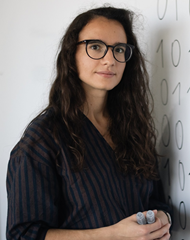
Manon Blanc, Department of Computer Science, Data and Artificial Intelligence, from Computer Science Laboratory of the École Polytechnique (LIX)
Thesis title: Discrete-Time and Continuous-Time Systems over the Reals: Relating Complexity with Robustness, Length and Precision
“What interests me is understanding how much a computation costs.” Behind this seemingly simple question, Manon Blanc explores one of the fundamental challenges of computer science: precisely measuring the resources required to solve a problem. The computer scientist, recipient of the L’Oréal-UNESCO For Women in Science Award 2025, situates her work within the field of theoretical computer science, which seeks to understand the deep mechanisms of computation.
*LIX : a joint research unit CNRS, École Polytechnique, Institut Polytechnique de Paris, 91120 Palaiseau, France
Photo credits © Jeremy Barande
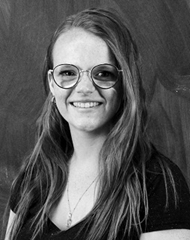
Marion Brouard, Départment of Economics, from Center for Research in Economics and Statistics (CREST)
Thesis Title: Bridging the Gaps: Three Essays on Inequality Across Age, Migration, and Gender
Do public policies (social benefits, financial transfers, etc.) effectively reduce inequality? By examining three distinct realities - economically vulnerable young adults, migrants seeking employment, and gender inequalities - Marion Brouard’s PhD research sheds new light on this question and challenges common assumptions.
“The first part of my research stemmed from the observation that 18–25-year-olds are the most economically vulnerable age group in France,” explains the young researcher. Despite being particularly exposed to poverty, young adults remain excluded from major welfare schemes such as the Revenu de Solidarité Active (RSA), France’s minimum income benefit. “This situation is often justified by the idea that families, rather than the state, should provide support. But this view is misguided, because family solidarity alone is not enough to reduce inequalities.”
To investigate this issue, Marion Brouard analyzed a rare and highly valuable dataset for an economist. “I had access to anonymized banking data that made it possible to measure household consumption very precisely and, more importantly, to observe financial transfers between parents and their children,” she explains. She examined data from 500,000 individuals provided by Crédit Mutuel. Her findings show that for every euro of public support received, parents reduce their financial assistance by only around ten cents. “Public support does not replace family support—it complements it,” summarizes the economist.
Marion Brouard’s research also highlights a gap between public perceptions of inequality and reality. While people generally consider an intergenerational inequality rate of around 10% - avoring older generations - to be acceptable, they judge it excessive when they discover that the actual figure lies between 30% and 40%. Her work also challenges the belief that welfare benefits discourage effort. “When financial constraints are eased, young people are more likely to continue their education,” the researcher observes. By making education more accessible, public support represents an investment in the future, leading to more stable and better-paid careers, and ultimately generating higher tax revenues.
The second part of Marion Brouard’s thesis focuses on migrants’ access to employment, another major source of inequality. For this research, she relied on detailed administrative data from the Swedish Public Employment Service. Once again, the findings run counter to common stereotypes. “Migrants do not search less actively for jobs than native-born workers—in fact, quite the opposite. If they remain unemployed for longer, it appears to be because they lack information about the most effective job-search strategies in their host country.” In practice, migrants tend to apply to companies that already employ foreign workers or target lower-paid positions, believing these will be easier to obtain. However, this strategy ultimately proves ineffective.
Finally, in the third and last part of her thesis, Marion Brouard examined the widening gender pay gap following the birth of a child. She conducted a survey involving 3,000 university-educated mothers. “The results showed that while some women are constrained by childcare costs or a lack of workplace flexibility, many also cite personal preferences or social norms—namely the desire to stay home and care for their children during the first years of life.” In this context, public policies have only a limited impact on narrowing wage gaps, serving mainly to allow mothers to work more or less depending on their preferences and constraints.
Now a postdoctoral researcher at Ludwig Maximilian University of Munich (LMU) and the Ifo Institute in Munich, Marion Brouard continues her work with the goal of informing public debate. She notably collaborates with France’s Council of Economic Analysis to help improve the design of redistribution policies. “A thorough understanding of the mechanisms behind inequality is essential if we want to address it effectively. The challenge is not simply to redistribute resources, but to understand how to do so in the most effective way,” she concludes.
*CREST : CNRS, École polytechnique, Groupe ENSAE-ENSAI, ENSAE Paris, Institut
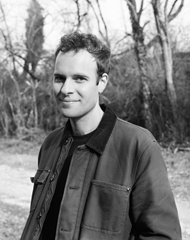
Maxime Cornet, Department of Social sciences and Management, from Center for Management Studies (I3)
Thesis Title: Data work and data for work: Uncertainty management and risk delegation in Artificial Intelligence production chains
Behind artificial intelligence lies a reality far less automated than it might suggest. “We often sell a magical image of AI, as if everything worked on its own,” observes Maxime Cornet. “In reality, these systems rely on largely invisible human labor.” During his PhD, the researcher focused on a still underexplored topic: the economics of producing the data used to train AI models.
While major technology companies rely on massive amounts of data, the way this data is produced remains largely opaque. Who produces it? Under what conditions? And according to what kind of economic organization?
To answer these questions, Maxime Cornet conducted an in-depth investigation in France and Madagascar. His work builds on that of Clément Leludec, co-recipient of the IP Paris PhD Prize 2025, who had previously focused on the workers themselves. “While Clément looked at the jobs, I focused on how this work is organized economically.”
His research shows that the data market relies only marginally on online platforms such as Amazon Mechanical Turk, where independent workers perform micro-tasks for a few cents. “Contrary to a widespread belief, this model remains marginal for the French AI ecosystem, which instead relies on complex subcontracting chains.” French startups often outsource data production to specialized companies, particularly in Madagascar.
By reconstructing these subcontracting networks through field interviews and administrative data, Maxime Cornet produced one of the first mappings of this market in France. “Such an organization helps render the work invisible. This is strategic for companies, which can sell a magical and automated vision of AI, even though it relies on a massive and precarious human infrastructure on the other side of the world. This is known as obfuscation,” he explains.
The thesis also highlights how data-related activities are structured. Maxime Cornet uses the term commodification to describe the transformation of labor into a standardized resource that can be traded on a market. However, this logic has its limits. “One might think everything comes down to labor costs and that companies are simply looking for the lowest wages, but in reality, they are also interested in well-structured local ecosystems,” he explains.
Madagascar is a case in point. The country has gradually established itself as a data production hub, thanks to a combination of skills, local companies, and relationships built over time. However, this market remains uncertain and unstable. “It’s still a bit like the Wild West,” the researcher acknowledges. “In this environment, trust plays a central role, often based on interpersonal relationships between French stakeholders and local providers.”
Beyond these findings, Maxime Cornet proposes several avenues for better regulating the sector. In particular, he advocates for greater regulatory transparency in subcontracting chains, in order to make visible the conditions under which the data used by AI systems is produced. He also encourages labor unions to take up these issues, which remain largely absent from public debate.
Now a postdoctoral researcher at CY Cergy Paris Université, Maxime Cornet continues his work on the impact of artificial intelligence on labor, in collaboration with Clément Leludec and partners such as the CFDT. “The idea now is to understand concretely how the deployment of these technologies affects sectors such as translation, publishing, law, and retail,” he concludes.
*I3 : a joint research unit CNRS, Mines Paris - PSL, Télécom Paris, École polytechnique, Institut Polytechnique de Paris, 91120 Palaiseau, France
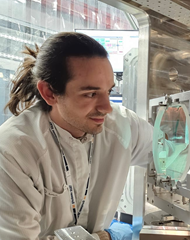
Aimé Matheron, Department of Physics, from Applied Optics Laboratory (LOA)
Thesis Title: Extreme plasma interactions for strong-field QED
Interactions between light and particles lie at the heart of Aimé Matheron’s PhD research—particularly in the context of extreme electromagnetic fields, such as those found around black holes or pulsars.
To investigate these phenomena, the young researcher relied on the theory of quantum electrodynamics (QED). “It combines two pillars of modern physics: quantum mechanics and special relativity (especially for particles approaching the speed of light),” he explains. “It is currently the best theory we have to describe interactions between light and electromagnetic fields, with the fewest approximations.”
Most QED phenomena have already been explored, theorized, and measured with unmatched precision—but only in moderate electromagnetic fields (10¹⁴ V/m), such as those generated by laboratory lasers or atoms. “The foundation of this theory is to treat particle–field interactions as weak, only slightly perturbing the overall system. In the case of extreme fields, this assumption breaks down.” This strong-field regime is an extension of QED in which its usual tools cease to function. “It is crucial for understanding certain astrophysical phenomena or even observing the creation of matter from pure light, yet it has never been experimentally tested.”
Aimé Matheron therefore recreated intense fields in the laboratory using lasers, while relying on relativity to compensate for their limited power. “When electrons traveling at speeds close to that of light collide with a laser beam, the field intensity is greatly amplified in the particle’s reference frame,” the physicist explains. In this way, he was able to reach 20–30% of the Schwinger limit, a theoretical upper bound for electromagnetic fields (10¹⁸ V/m). Under these conditions, electrons emit gamma radiation, in agreement with the predictions of strong-field QED.
Achieving this result required significant innovation. “Bringing together an electron beam and a laser beam, both on micrometer scales, is a real challenge.” This is where self-aligned schemes come into play: a single laser beam is used to create a plasma in a gas jet and accelerate electrons behind it, “much like a surfer riding behind a boat.” By placing a thin plastic foil at the laser’s exit, the researcher reflects the beam, allowing it to collide with the trailing electrons. This setup achieves a collision rate close to 100%.
These experiments were conducted using the Apollon laser, one of the most powerful lasers in the world. A second series of experiments, carried out at the SLAC National Accelerator Laboratory, relied on the electromagnetic field of electrons reflected by a metallic foil to trigger collisions.
Now a postdoctoral researcher at the Helmholtz Institute in Germany, Aimé Matheron is studying vacuum birefringence, a phenomenon in which light could interact with itself through quantum fluctuations of the vacuum. His new challenge is to test the limits of our fundamental models.
*LOA: a joint research unit CNRS, École Polytechnique, ENSTA Paris, Institut Polytechnique de Paris, 91120 Palaiseau, France
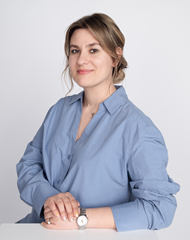
Ingrid Popovici, Department of Chemestry and Chemical Engineering, from Molecular Chemistry Laboratory (LCM)
Thesis Title: Iminophosphorane polydendate ligands in combination with earth abundant metals for molecular catalysis
Today, industrial chemistry relies on specific substances that accelerate chemical reactions and improve their yields: catalysts. However, it faces a major limitation: most of these catalysts are made from rare and expensive metals such as rhodium or platinum, prompting the search for more accessible alternatives. This is where Ingrid Popovici’s PhD work comes in. “My idea was to substitute nickel, iron, or cobalt for these rare metals,” explains the researcher.
The challenge was significant because, although more abundant, these elements are naturally less efficient in catalysis. To overcome this, Ingrid Popovici used an original strategy consisting in electronically enriching them. In practice, she combined them with molecules called ligands, which can enhance their performance.
The young researcher thus worked on iminophosphoranes, a family of ligands composed of phosphorus and nitrogen. “These molecules are easily modifiable, and it is possible to increase their electron-donating capacity by adding substituents,” she explains. In the first part of her thesis, Ingrid Popovici studied the most relevant substituent–iminophosphorane combinations to obtain the most electron-rich ligand and, consequently, a high-performance catalyst based on abundant metals.
She synthesized complexes based on iron, manganese, and cobalt that catalyze transfer hydrogenation. “Hydrogenation is a key reaction for industry, used in the production of ammonia—essential for manufacturing fertilizers. Transfer hydrogenation is an alternative that uses stable molecules such as alcohols, avoiding the need for highly flammable hydrogen gas,” explains Ingrid Popovici. Her team thus developed a catalyst capable of competing with those based on much rarer metals.
The chemist also developed an innovative nickel-based catalyst designed for hydrosilylation, a crucial reaction in the electronics and pharmaceutical sectors. “It has the dual advantage of being stable and extremely selective,” she says enthusiastically. In other words, it is easy to handle and requires little energy. Moreover, if a molecule has two chemical functions, it transforms only one of them—an important asset for industry, particularly when it helps avoid costly purification steps.
These results address both economic and strategic challenges. “The goal is to avoid resource tensions and gain greater sovereignty.” By relying on abundant metals, industry could reduce its dependence on critical materials.
Beyond applications, this thesis also includes a fundamental component dedicated to understanding the mechanisms involved in these catalytic reactions. “We are the first to have demonstrated an original process based on an intermediate nicknamed ‘butterfly,’ due to the shape taken by the ligand during the reaction,” the researcher explains.
Since defending her PhD in July 2023, Ingrid Popovici has been working between the Institut de Science et d’Ingénierie Supramoléculaire and the Karlsruhe Institute of Technology. She is continuing her research as a postdoctoral fellow on materials for quantum technologies. “My philosophy remains the same as during my PhD: developing stable compounds to facilitate their industrial use.”
*LCM : a joint research unit CNRS, École polytechnique, Institut Polytechnique de Paris, 91120 Palaiseau, France
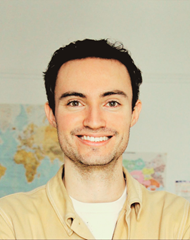
Thomas Sentis, Department of Humanities, Art, Literature and Languages, from the X Interdisciplinary Laboratory (LINX)
Thesis Title: The future of technology. Thinking the relation between knowing and making through Heidegger
Is technology a threat or our only salvation? This philosophical question runs throughout Thomas Sentis’s PhD thesis. Long regarded as a mere set of tools, technology is now at the very heart of our societies. “Originally, it referred to everything that enables human beings to produce and transform the world: machines, gestures, methods…,” explains the researcher. While the topic already appeared in the 19th century in Karl Marx’s reflections on the transformation of modes of production, it became unavoidable in the 1930s with industrialization and the upheavals of the world wars. Today, it has returned to the forefront with artificial intelligence and the ecological crisis.
This latter theme highlights the ambivalent nature of technology. It is often identified as one of the main causes of current problems, through productivism and the exploitation of resources. At the same time, it is presented as the solution, with green energy, carbon capture, and various technological innovations. “Technology is blamed for having created the problems, yet it is also expected to solve them,” the scientist summarizes.
This contradictory injunction has intensified over time. Between Thomas Sentis’s admission to École polytechnique in 2015 and the defense of his thesis ten years later, the intellectual climate and our perception of technology have profoundly changed. In 2015, society was driven by the hope of COP21 and the idea that green energy would peacefully resolve the climate crisis. Today, following the failure of COP30, the return of geopolitical tensions, and the massive emergence of AI, our relationship with technology has become much more strained. “We fear it more, yet we cling to it even more because we depend on it.” This reflection is all the more significant in the context of the Anthropocene, an era defined by human activity.
To think through this situation, Thomas Sentis draws on the work of the philosopher Martin Heidegger (1889–1976). According to this German thinker, machines reveal a relationship to being that is specific to the modern era. In his view, technology frames everything that exists—nature, humans, and so on—as a resource available for exploitation. “Human beings are no longer masters of technology; they are at its disposal. Only a god can save us, Heidegger added.” He also believed that this relationship to being could be found in both capitalism and communism.
Should we therefore conclude that technology is a dead end? For Thomas Sentis, “another path is possible—technology is not necessarily a closed destiny.” By returning to its older meaning, that of technē (know-how), he proposes alternative ways of acting. “Rather than relying solely on high-tech solutions, we should also develop concrete, sometimes simple practices to address current challenges: new ways of working the land, managing resources, and organizing production.”
The researcher supports his argument by drawing on the work of two other philosophers, Reiner Schürmann (1941–1993) and Bruno Latour (1947–2022). The former emphasizes that no form of domination—not even that of technology—is eternal. “Schürmann wrote that time always shatters the domination that weighs on our present. It is the singularization to come.” The latter rejects the idea of a definitive solution or salvation. “According to him, we have entered a regime in which the world must be recomposed every day to make it livable, particularly in the face of ecological challenges.”
Thomas Sentis’s ambition is therefore to move beyond a reactionary or nostalgic critique of technology and instead develop a technical critique of technology itself: “What really works? What can we do without?”
Now a temporary teaching and research assistant at Centrale Lyon, he continues this reflection by teaching ethics and the philosophy of science. His thesis award also reflects the growing importance of these issues in scientific education.
“At a time when technology shapes our societies more than ever, the future also depends on what we learn to do, technically, in response to the technical problems of the present,” Thomas Sentis concludes.
*LINX : a joint research unit Ecole Polytechnique, Institut Polytechnique de Paris, 91120 Palaiseau, France
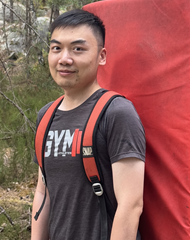
Jiawei Wang, Department of Biology, from Optics and Biosciences Laboratory (LOB)
Thesis Title: G-quadruplexes as dynamic regulators at the nucleic acid–protein interface: Structural insights, applications in virology and genome engineering
Jiawei Wang’s doctoral research lies at the intersection of structural biology—the study of the relationship between the structure and function of biological molecules—and nucleic acid biophysics. His work focuses on unusual DNA and RNA structures known as G-quadruplexes, or G4.
While DNA is typically depicted as a double helix, genetic material can fold into alternative three-dimensional structures. “These structures are now recognized as important regulators of key biological processes such as replication, transcription and translation. When their formation or regulation is disrupted, they can contribute to diseases such as cancer, neurodegenerative disorders, or viral infections. This is the context in which my PhD took place,” explains Jiawei Wang.
His research aims to better understand how these G4 structures form, how they interact with proteins, and how to develop more precise tools to study them.
A significant part of his work focused on CANVAS syndrome, a rare late-onset neurological disorder characterized by progressive balance impairment, coordination deficits and nerve damage. “Taken together, rare diseases affect 3 to 6% of the global population, making them a major medical and scientific challenge,” he notes. Jiawei Wang studied a repeated DNA sequence—AGGGA—associated with CANVAS. He demonstrated that this sequence can adopt multiple unusual alternative structures rather than a single simple and stable form, such as the classical DNA double helix. This unexpected structural diversity provides new molecular insight into the biological complexity of these sequences.
The researcher also investigated interactions between G4 structures and proteins in broader biological contexts. “I studied proteins from viruses responsible for hemorrhagic fevers and identified others that may bind to G4 structures. To do so, I combined bioinformatics screening, experimental validation and molecular simulations.”
Finally, Jiawei Wang worked on developing a more selective strategy for targeting G4 structures, based on a fusion protein—engineered to recognize G4 structures while also reading neighboring DNA sequences. The goal was to move from general G-quadruplex recognition to the precise study of individual G4 structures within complex genomes, which contain vast amounts of information, repeated sequences and diverse structural features.
This thesis is highly interdisciplinary. It combines structural biology, molecular biophysics, bioinformatics, molecular simulations and protein engineering to propose a unified structure–mechanism–tool framework for studying G4 structures. More broadly, it highlights the need to consider genetic material as a dynamic structural system, in which DNA is not fixed but folds, changes shape and adapts to cellular conditions. “It is not simply a linear sequence of letters. Understanding this structural dimension could open new perspectives in fundamental biology, in the study of disease mechanisms, and in future therapeutic innovations.”
Jiawei Wang is currently working in the biopharmaceutical industry in China, where he continues to apply his expertise in structural biology and molecular analysis to biomedical research and development.
*LOB : a joint research unit CNRS, Inserm, École Polytechnique, Institut Polytechnique de Paris, 91120 Palaiseau, France