



How the Ocean Absorbs CO2: Laurent Bopp’s Innovative Models

Since 1850, 30% of the CO2 in the atmosphere has been absorbed by the ocean, which itself contains 40 trillion tons of it. “Understanding the carbon cycle in the oceanic environment means understanding the link between anthropogenic CO2 emissions, the evolution of this gas in the atmosphere, and climate change,” explains Laurent Bopp, CNRS research director at the Laboratory of Dynamic Meteorology (LMD).
A physicochemical process
The operating principle of the oceanic carbon sink has long been known and is based on physicochemical mechanisms: excess CO2 in the atmosphere is dissolved in the upper layers of the ocean, converted into bicarbonate ions, and then transported to the depths. It was on this basis that earlier models for assessing this carbon sink were developed. But it’s not quite that simple.
While defending his dissertation in 1998, Laurent Bopp began to dissect the link between climate change and the sink’s effectiveness. At the time, the researcher highlighted the impact of the former on the latter: on the one hand, rising water temperatures reduce the solubility of the gas, and on the other hand, they promote ocean stratification (its organization into layers differentiated by salinity, temperature, density, etc.), which prevents CO2 dissolved in surface waters from penetrating deeper layers. “The effect is negative for the carbon sink, which sees its capacity reduced and becomes saturated with CO2. It thus contributes to a positive feedback loop for climate change, which is in turn amplified,” summarizes the researcher.
Laurent Bopp has modeled this climate-carbon feedback loop and coupled it with the tools used by the IPCC** to establish its projections, thereby contributing to the determination of carbon emission targets in line with international climate ambitions.
The scientist doesn’t stop there and incorporates into his models other phenomena affecting the ocean carbon cycle, such as ocean acidification. In this process, CO2 combines with water molecules to form an acid that itself releases hydrogen and bicarbonate ions. “But here again, a feedback loop sets in because CO2 also reacts with carbonate ions, which are displaced by hydrogen. The ocean then becomes more acidic and less effective at absorbing CO2, which amplifies its acidification, and so on.” This research has also led him to examine the impact of this phenomenon on ecosystems. Indeed, by capturing carbonate ions, CO2 deprives certain species of the building blocks they need to form their shells or skeletons, which is harmful to them.
The Importance of Living Organisms and the Biological Pump
In addition to acidification, living organisms are also affected by changes in ocean temperature and circulation. “Stratification, which we’ve already discussed, slows down phytoplankton production, prevents it from transporting the carbon it has fixed to the depths, and could reduce the capacity of the ocean carbon sink. Understanding the effects of climate change on this biological pump is therefore essential.” But working with living organisms is a complex task that raises many unknowns, including processes related to evolution. The simulations developed by the researcher and his team show that phytoplankton, with its daily generational turnover, adapts rapidly to new environmental conditions. Zooplankton, whose individuals live for up to several months or years, on the other hand, suggest longer evolutionary processes and lower adaptive capacities. “We are trying to integrate these parameters into our carbon cycle models to make them even more realistic,” emphasizes Laurent Bopp.
Let us now turn our attention to the coastlines. At the ocean-land interface, vegetated coastal ecosystems (known as “blue carbon” ecosystems) cover small areas but possess phenomenal carbon storage capacity. Yet they are largely underrepresented in global carbon cycle models. “This requires computational costs that are too high, so model resolutions remain coarse. One of our projects is to address this gap,” says the research director enthusiastically. This will make it possible to assess the impact of human activities on these areas, such as mangroves affected by deforestation. Consequently, scientists will observe how this affects carbon fluxes between the “atmosphere and mangroves,” as well as between “coastal zones and the open ocean.”
Adapt, Mitigate, Assess
Similarly, proposed solutions in the fight against climate change can now be precisely assessed and quantified. Whether these are adaptation projects addressing the effects of global warming—such as the conservation or restoration of blue carbon ecosystems—or more technical mitigation projects.
“For example, we have demonstrated and assessed the side effects of coastal afforestation using macroalgae. The goal is to absorb more CO2, but our tools have shown that phytoplankton can no longer find the nutrients it needs. As a result, a new feedback loop impacts the oceanic carbon sink.” The same applies to a project involving iron fertilization of phytoplankton, which was considered in the past in the Southern Ocean. “We have identified repercussions extending all the way to tropical zones where, due to ocean circulation, fish stocks no longer have the nutrients they need, which affects local fisheries.” It should be noted that, in this context, the tools developed by Laurent Bopp and his team can contribute to the implementation of regional policies for adapting fishing strategies to climate change.
“The ocean is a complex, three-dimensional environment: an action taken in one place can have unexpected effects and reverberate thousands of kilometers away. We’re trying to assess all of this. It’s fascinating and exciting,” concludes the research director.
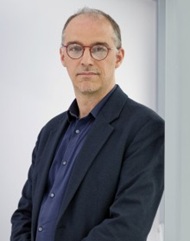
About Laurent Bopp
Laurent Bopp is a CNRS Research Director at the Laboratory of Dynamic Meteorology, as well as a climatologist and oceanographer. He was elected to the French Academy of Sciences in January 2025 and received the CNRS Silver Medal (2025). He works on the carbon cycle in the ocean and is particularly interested in the evolution of the ocean carbon sink. He also studies ocean acidification and the impacts of climate change on marine ecosystems. Laurent Bopp is the author or co-author of more than 200 scientific publications in international journals and served as lead author on the 5th and 6th Assessment Reports of the Intergovernmental Panel on Climate Change (IPCC). He received the Marine Sciences Prize from the French Academy of Sciences and is a member of the Academia Europaea.
>> Laurent Bopp on Google Scholar
>> Laurent Bopp on the IPSL website
Crédit photo : Laurent Arduin pour le CNRS
*LMD: CNRS, École Normale Supérieure, Université PSL, Sorbonne Université, École polytechnique, ENPC, Institut Polytechnique de Paris, Palaiseau, France
**IPCC : International Panel on Climate Change