



CIEDS partners’ dinner at IP Paris’s defence centre: Showcasing key developments, achievements and strategic projects
Notable Scientific Advances and Achievements
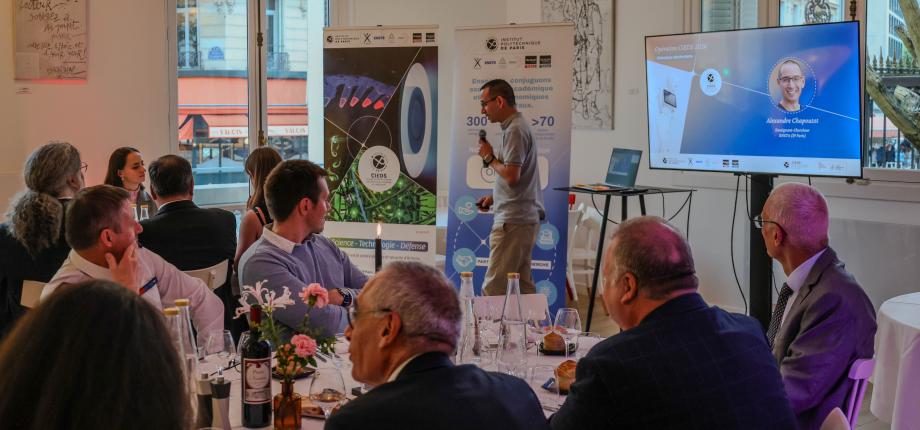
The dinner provided an opportunity to showcase four key areas of research at the CIEDS: air-ground robotics, metal additive repair, cybersecurity and quantum technologies.
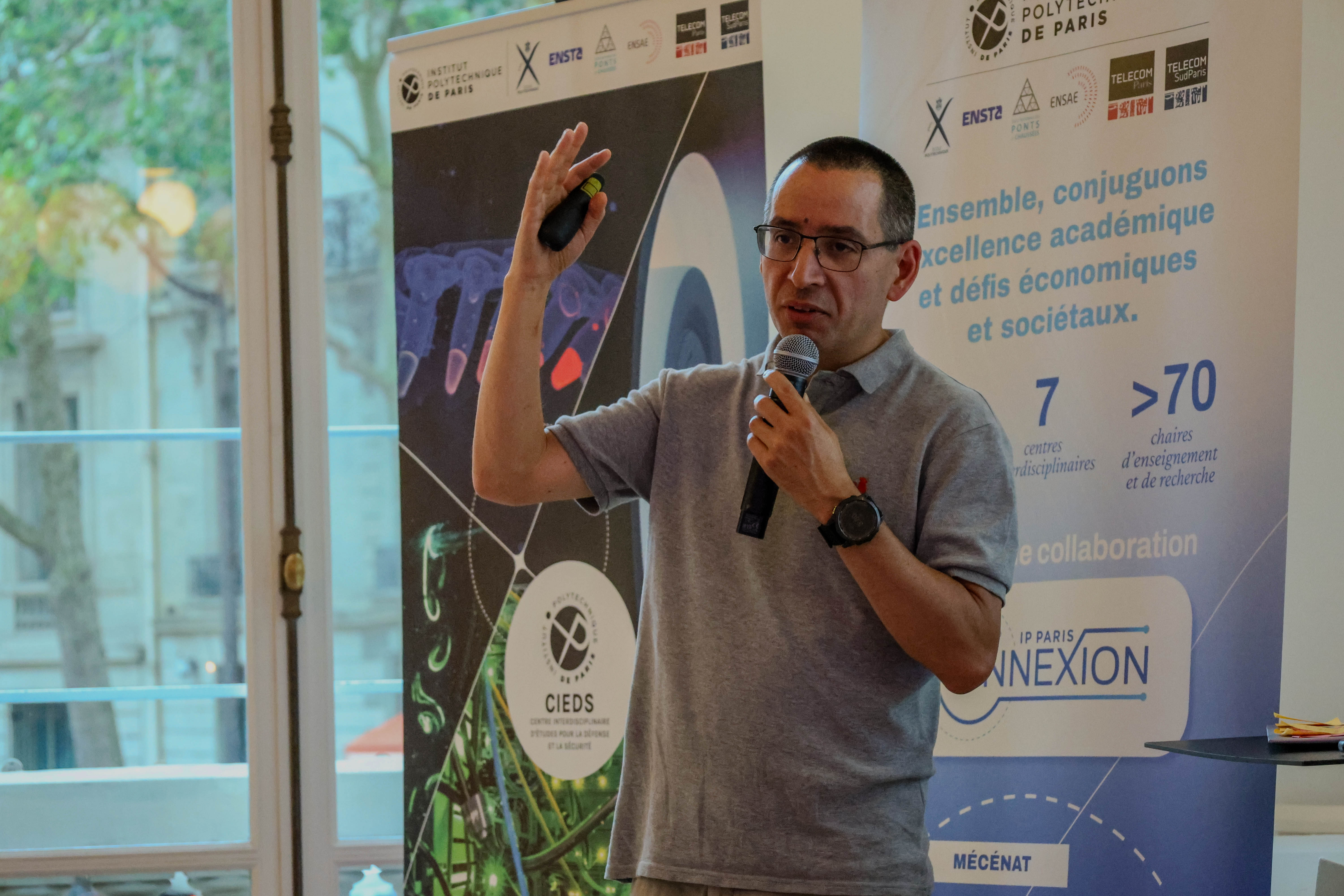
Presentation by Alexandre Chapoutot
Alexandre Chapoutot, Assistant Professor in the Systems Engineering and Computer Science Unit (U2IS) at ENSTA, has provided a state-of-the-art review of air-ground defence robotics at Institut Polytechnique de Paris (IP Paris). He highlighted the growing importance of robotic systems, particularly drones, in the current geopolitical context, where they can provide a significant operational advantage on the battlefield. Research in this field focuses primarily on two key scientific challenges: autonomous ground navigation and the coordination of multiple platforms. Several research projects have dual-use applications and are conducted with the support of the French Defence Innovation Agency through the CIEDS and the CIMO.
Among these projects, CHRoMM (Multi-Platform, Multi-Environment Human–Robot Collaboration) brings together researchers from ENSTA, École Polytechnique and Télécom Paris to develop coordination algorithms for heterogeneous robots. The CoCoA project (Adaptive Collaborative Combat), conducted in partnership with John Cockerill Defense, aims to design learning algorithms that remain robust in changing environments. Experiments will be carried out at ENSTA’s land, air and sea testing facility in Brest and in the future drone arena on the Paris-Saclay campus.
Fabien Szmytka, Professor at ENSTA’s Institute of Mechanical Sciences and Industrial Applications (IMSIA), then presented an overview of the work carried out at IP Paris on metal additive repair.
“Additive repair is about achieving performance where you would least expect it,” the researcher explained. Repairing rather than replacing components extends their service life and can, in some cases, generate savings of up to 70% compared with purchasing a new part.
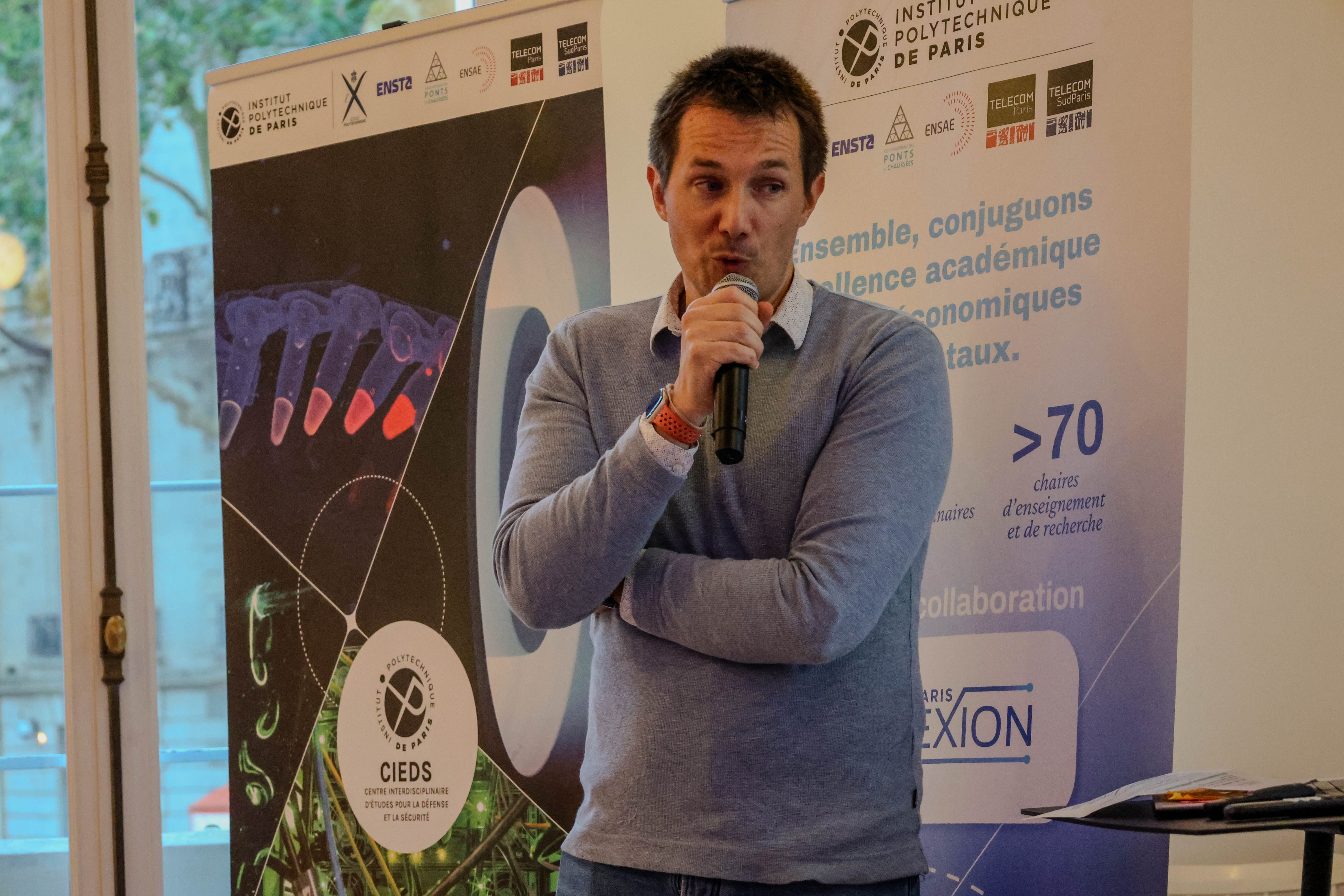
Presentation by Fabien Szmytka
Before an industrial component can be repaired, the process is validated on test specimens through four stages: identifying the target microstructure by pinpointing defects to be corrected (cracks, corrosion, etc.) and the areas requiring repair; adding material in successive layers to repair and strengthen the component and, in some cases, give it new properties; optionally functionalising the repaired area to enhance the component’s performance beyond its original state; and planning the transition from the test specimen to the actual structure through intermediate-scale testing. “Repair must be anticipated at the design stage, not simply dealt with when problems arise. Material durability and sovereignty are two key considerations guiding our choices,” the researcher concluded.
This work is being carried out as part of the QUADS and subsequent QUADS2 projects, funded by the French Defence Innovation Agency through the CIEDS.
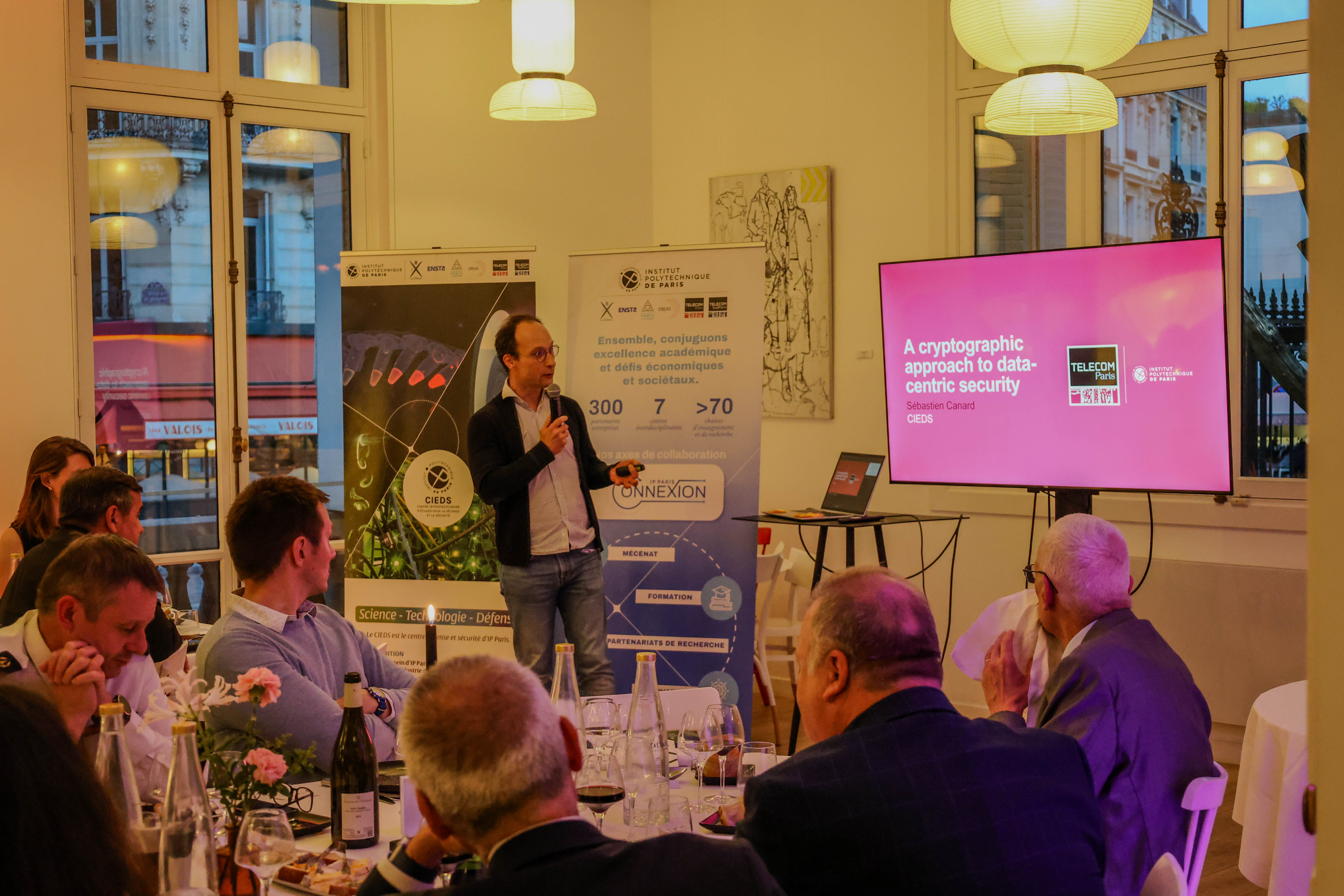
Presentation by Sébastien Canard
Sébastien Canard, a lecturer and researcher at Télécom Paris’s Information Processing and Communications Laboratory (LTCI), then discussed the latest advances in cybersecurity at IP Paris. “In a world where data, now as precious as diamonds, are increasingly distributed, shared and exposed, traditional cybersecurity approaches, such as access control policies, are showing their limitations”. His research focuses on developing Data-Centric Security (DCS), an approach in which protection is embedded directly into the data itself, rather than relying on its surrounding environment.
Through persistent encryption mechanisms, information remains protected at all times, wherever it is located, while ensuring full traceability and fine-grained access control to determine who accesses what, when and why. This approach offers unparalleled flexibility, but several challenges remain: ensuring effective data protection without slowing down data use or requiring excessive computing resources; anticipating the threats that future quantum computers could pose; and enabling increasingly granular management of access rights to information.
Davide Boschetto, Professor at ENSTA and researcher at the Applied Optics Laboratory (CNRS–École Polytechnique–ENSTA), then presented his research in quantum physics, focusing in particular on work carried out as part of the MAGNETOQUANT project, funded by the French Defence Innovation Agency through the CIEDS. The project aims to develop a quantum magnetometer that operates at room temperature, without the need for cryogenic cooling. It relies on nitrogen-vacancy (NV) centres in diamond: defects where a nitrogen atom replaces a carbon atom and lies next to a vacant site in the crystal lattice.
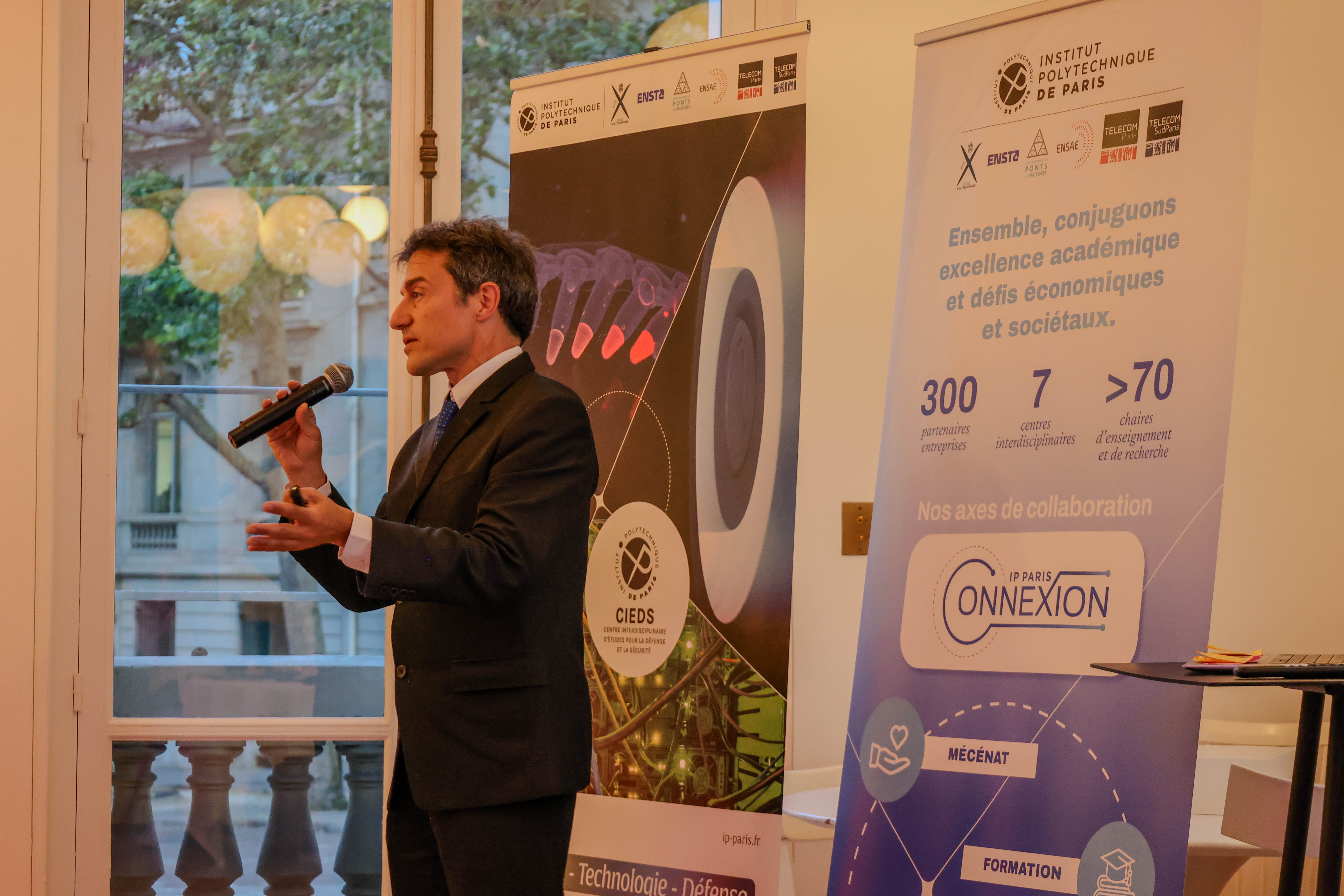
Presentation by Davide Boschetto
Their quantum properties make it possible to measure magnetic fields with greater sensitivity than existing devices. This research has numerous potential applications in both civilian and military fields. “In the civilian sector, such sensors could contribute to medical imaging and the exploration of mineral resources or geological structures likely to contain hydrocarbons, including in marine environments. In the defence sector, they could be used to detect magnetic anomalies associated with buried or submerged objects that have a sufficiently strong magnetic signature, including certain underwater mines,” explains Davide Boschetto. The researcher also outlined several avenues for further research: improving sensor sensitivity through more sophisticated measurement protocols, enabling the detection of ever smaller variations in magnetic fields; and investigating new ultra-thin materials to explore novel sensor architectures and their potential for miniaturisation.
Strategic Partnerships
This exclusive partners’ dinner also provided an opportunity to celebrate the breadth of the CIEDS strategic partnerships and explore opportunities for future collaboration.
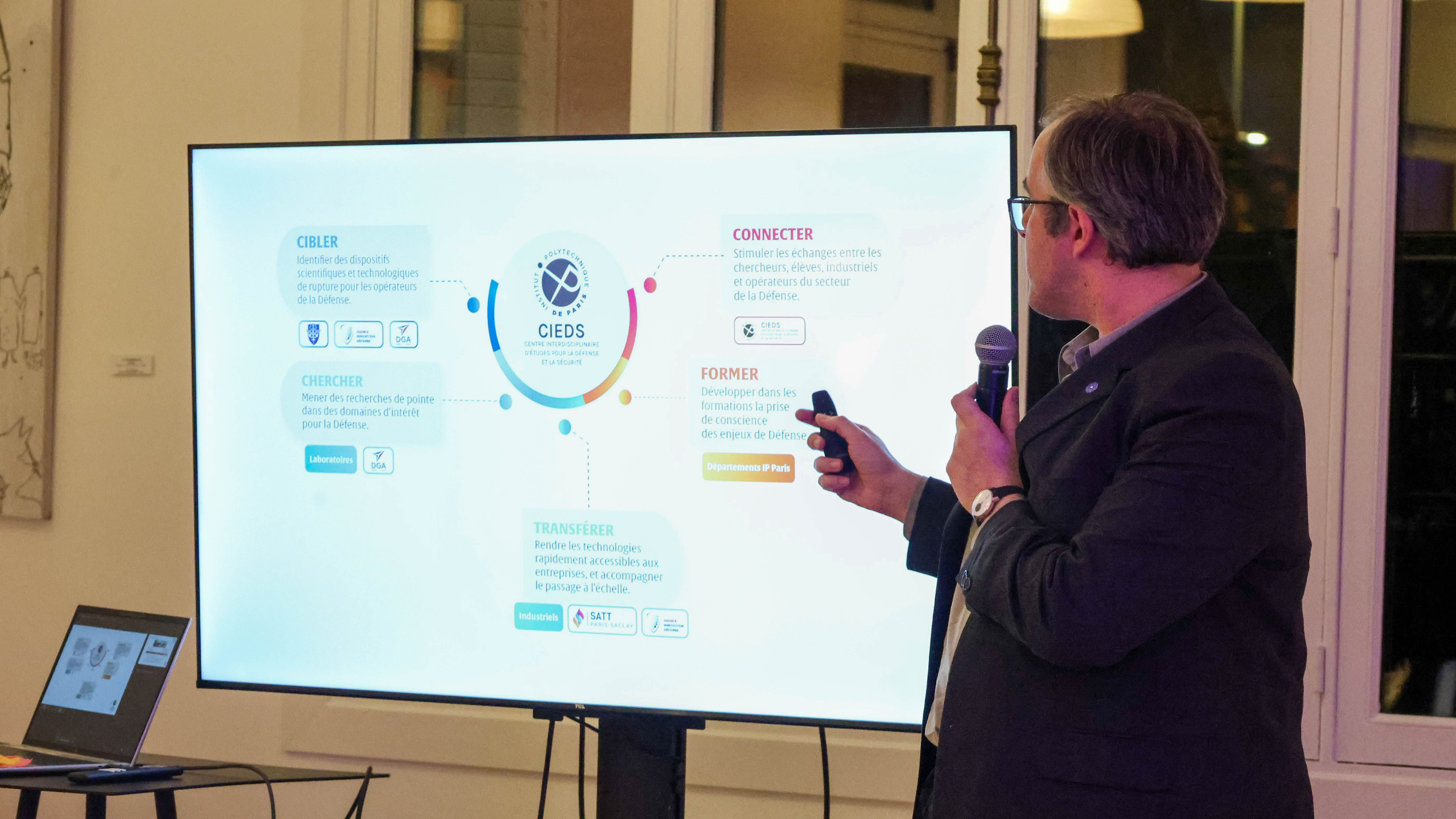
Presentation by Olivier Blazy,
Scientific Director of the CIEDS
One of the objectives of CIEDS is to build strategic partnerships with companies in the French defence industrial and technological base (BITD), ranging from small and medium-sized enterprises (SMEs) and mid-sized companies to major corporations, in order to help strengthen national technological sovereignty. These partnerships are designed to be strategic in several respects: in the ambition of the projects undertaken jointly, in the long-term commitment underpinning these collaborations to address complex challenges, and in the resources mobilised to achieve these shared objectives.
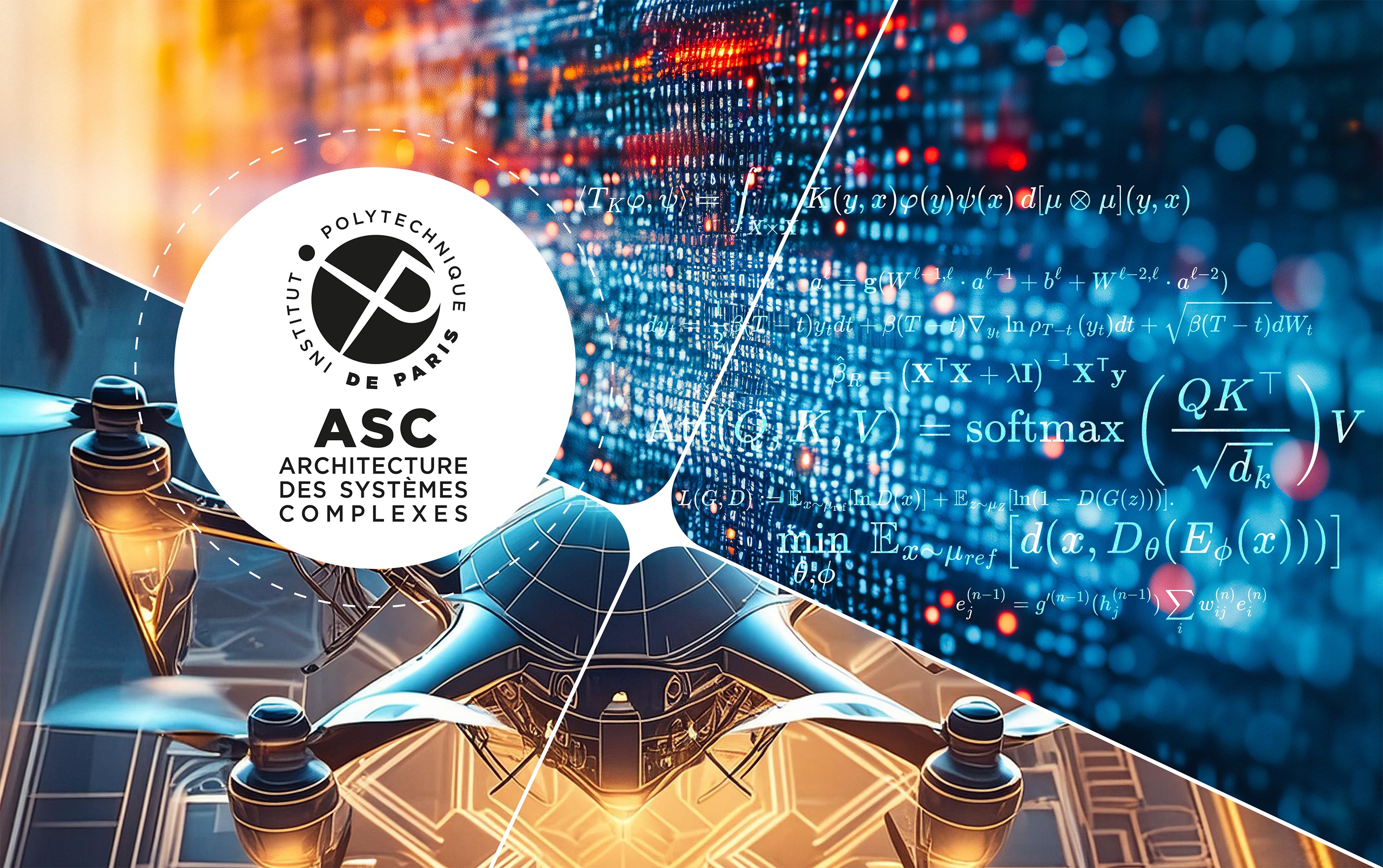
The ASC project is a prime example of this collaborative approach. Established in 2023 with the support of Dassault Aviation, Naval Group, KNDS, Dassault Systèmes and the French Defence Innovation Agency, the ASC project led to the creation of the IP Paris Chair in Complex Systems Architecture. The Chair aims to strengthen expertise in systems architecture to address the growing complexity of industrial and operational systems. More specifically, it seeks to advance teaching and research through a systems-based, multidisciplinary approach, supported by academic staff, engineers and postdoctoral researchers.
This approach brings together a range of scientific disciplines, including artificial intelligence, safety, security, systems engineering, robotics and simulation. In addition to the Chair, the ASC project has led to the establishment of dedicated research projects between industry partners and laboratories, as well as workshops designed to foster discussion and co-creation among ASC partners. These workshops address topics of shared interest, such as model-based systems engineering (MBSE) modelling and simulation of defence systems of systems, natural interaction between humans and cyber-physical systems, and dynamic operational planning in highly uncertain environments.
Another excellent example of a strategic partnership is the partnership with ONERA, a public research establishment under the authority of the French Ministry of the Armed Forces and Veterans Affairs. This strategic partnership builds on an initial agreement signed in 2019 between ONERA, École Polytechnique and ENSTA. It aims to facilitate and strengthen interactions between the three institutions in order to develop joint, interdisciplinary research at the intersection of mechanics, physics and digital technologies. Three research projects led by the CIEDS and funded by the French Defence Innovation Agency are currently being carried out in collaboration with ONERA. The first, OPEN NUM DEF, is led by the CMAP laboratory at École Polytechnique. It aims to develop numerical methods for the design and simulation of complex fluid flows. The second, ALTERFUEL, is led by the UCP laboratory at ENSTA. Its objective is to characterise alternative aviation fuels in order to reduce the carbon footprint of defence aviation, while meeting compatibility requirements relating to the specifications and additives used in this field. Finally, the third project, RoCam, is led by the U2IS laboratory at ENSTA. It aims to develop optimal control algorithms for autonomous aerial vehicles capable of collectively handling critical payloads in complex environments. Research-led education is also central to this collaboration, which seeks to enhance the partnership’s appeal, attract and welcome students interested in these fields of study, and promote the transfer and exploitation of research results.
Further partnerships may be developed in the future with research organisations, companies within the French defence industrial and technological base (BITD), and start-ups, with a view to fostering new collaborative projects.