



Amorphous Materials and Simulation: The Art of Disorder by Anne Tanguy
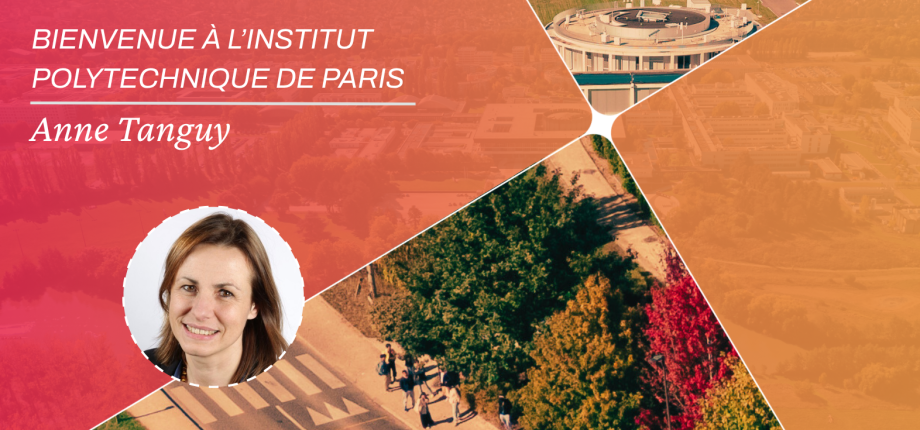
Anne Tanguy has always wanted to understand the world around her. When she discovered physics, she found a way to satisfy her curiosity and gradually decided to make it her profession. After high school, she enrolled in a preparatory class with the goal of entering École Polytechnique. During her engineering studies there, her materials science professors instilled in her a passion for theoretical physics and mechanics. “That was when I fully grasped the extent of our ignorance, which reignited my need to know and understand.” She then turned toward research, pursuing a master’s degree in theoretical physics at École normale supérieure (ENS PSL), followed by a PhD.
She became interested in disordered systems and solid friction. “Disorder is usually associated with problems or unpredictability. In my field, it is synonymous with resilience,” the researcher explains with a smile. Building on this experience and after a postdoctoral year, Anne Tanguy joined Claude Bernard Lyon 1 University. “I was recruited as an associate professor to work on numerical simulations of amorphous materials and their mechanical properties.”
Simple yet complex materials
But what does “amorphous” mean? “These are solid materials whose atoms are arranged in a completely disordered way, with no regularity other than their average interatomic distance. They are quite common in nature.” These materials exhibit spatially heterogeneous behaviors that are difficult to describe mathematically at the atomic scale. “The contrast with their apparent simplicity makes you want to tame them and uncover their secrets,” she adds.
Resilience is one of the defining properties of amorphous materials. When subjected to physical stress, energy dissipation is highly localized, allowing them to absorb large amounts of energy without undergoing significant or irreversible deformation. “They do not easily propagate damage mechanisms on a large scale and are quite resistant to cracking, contrary to common perception.” Glasses, for example, are amorphous materials. Fragile when pre-cracked, they are more resistant than crystals to high-energy impacts. This includes not only window glass but also other types, such as metallic glasses. These are less thermally conductive than their crystalline counterparts and more resistant to plastic deformation. Their irregular structure also leads to an apparently damping behavior, which is useful for mitigating high-frequency vibrations.
Imaging collective atomic behavior
The emergence of numerical simulation in the late 1990s paved the way for major advances in the study of disordered materials, particularly by enabling the visualization of the collective behavior of large numbers of atoms. “It allows us to go further than experimentation, while remaining aware that it is imperfect and not a digital twin of reality. That is precisely what makes it so appealing,” notes Anne Tanguy. At the interface between physics and mechanics, she develops simulation programs. She uses these tools to guide scientific observation and highlight the properties of amorphous materials: elasticity, plastic response, thermomechanical behavior, and more recently, thermal conductivity.
Today, after several years at the National Institute of Applied Sciences (INSA) in Lyon, at ONERA’s Materials and Structures Scientific Directorate (where she contributed to the creation of the Institute of Aeronautics and Astronautics), and a mission within the French Ministry of Higher Education and Research, Anne Tanguy is now leveraging her position at IP Paris to further explore disordered materials.
Her research focuses both on the atomic scale and on the laws governing their behavior at larger scales, as well as on lightweight architected structures and their mechanical response for aeronautical applications. “The environment here is very dynamic, enriched by many nationalities and perspectives. It is particularly stimulating!”
Connecting science and society
Another source of stimulation is her role as Dean of the École Polytechnique Bachelor’s program, which she took on upon arriving at IP Paris. Anne Tanguy values both the high standards of the students—whom she learns from every day—and the opportunity to contribute to a new way of teaching at this level. The program connects mathematics, which is central to her work, with other disciplines open to society, such as economics and computer science. “Society evolves in the direction we give it, and we cannot turn away from that. In a world where irrationality carries significant political weight, it is essential to bring scientists back into the conversation. I would be proud to contribute to that.”

About Anne Tanguy
Graduated from École Polytechnique, Anne Tanguy began her professional carreer as an assistant professor of theoretical physics where her work focused on constitutive laws of glasses, then became a professor in mechanical engineering at INSA Lyon in 2015. In 2020, she has been appointed scientific director of the Materials and Structure division at ONERA. After spending a few months in the Ministry of Research as deputy director of the Research and Innovation Strategy department, she joined LMS and M4S as a professor at École Polytechnique and dean of the bachelor.
>> Anne Tanguy on Google Scholar
*LMS: a joint research unit CNRS, École Polytechnique, Institut Polytechnique de Paris, 91120 Palaiseau, France
**As part of the STEP² project selected by the French National Research Agency (ANR) under the “Excellence in All Its Forms” (EXES) call for projects within the France 2030 program (ANR-22-EXES-0013).