



AI and digital twins: Alexandre Daby-Seesaram accelerates organ simulation for diagnosis and surgery
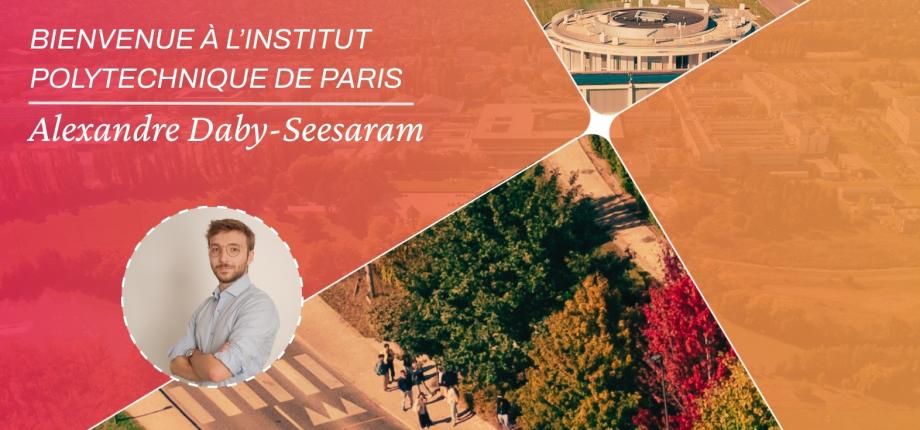
Alexandre Daby-Seesaram is assistant professor at ENSTA and a membrer of Mechanics and Interfaces Laboratory (LMI*). He has held this position since early 2026 as part of a Tenure Track program at the Institut Polytechnique de Paris**, which is a logical continuation of a career marked by mechanics. “I've always wanted to understand the tangible things around us. When I realized that mechanical equations governed many everyday phenomena, I wanted to move into fluid mechanics.” Following the advice of a close academic friend, Alexandre Daby-Seesaram enrolled at ENS Cachan (now ENS Paris-Saclay). Although the curriculum focused more on solids, the young student found a scientific mix that suited him: mathematics, physics, modeling, studying real-world problems... “I was thrilled!”
He was fascinated by the interactions between general mechanics and computer science, and then simulation. He then embarked on a Master's 2 research degree in numerical mechanics, landed an internship and then a PhD in this field at the former ENS Mechanics and Technology Laboratory (now the Paris-Saclay Mechanics Laboratory). During his three years of doctoral study, the young researcher developed models offering rapid simulations for calculating the probability of structural element failure in nuclear power plants.
Testing treatments, training surgeons
Alexandre Daby-Seesaram was then infected with the virus of computational mechanics and academic research. “I quickly felt the need to continue working with all these tools, but I wanted to move away from industry and work in fields that had a greater impact on society.” New doors opened during his thesis when he taught classes at Ecole Polytechnique and met Martin Genet, a professor and researcher at the Laboratoire de Mécanique des Solides (LMS***). “Martin was working on modeling physical phenomena characterizing the heart and lungs. The need to speed up his calculations by integrating model reduction methods was becoming apparent. He recruited me as a postdoctoral fellow in his team.”
In order for these digital twin models to be clinically transposable, their parameters had to be adapted to numerous patients. “The aim here is to accurately represent a patient over time in order to test remedies or surgeries before prescribing them or performing them,” emphasizes Alexandre Daby. This involves exploring numerous possibilities for each parameter, which means long and costly calculations that are not well suited to the time constraints of medicine. This is where the postdoctoral researcher's work came into its own.
The young researcher is now fully aligned with his values, and his skills as a mechanic of deformable structures are perfectly suited to biomechanics. "Working with living organisms requires the combination of various physical sciences and brings a degree of uncertainty that well-defined industrial problems do not have. It's very stimulating. That's also why I chose to apply for this tenure track position," he explains.
This arrangement gives Alexandre Daby-Seesaram a great deal of freedom. He is continuing his postdoctoral work on reducing lung models for therapeutic purposes, but is also developing new areas of research such as robotic surgery assistance. “The aim is to quickly simulate, during an operation, the impact of a procedure on the patient's body and integrate the results into the robot's control algorithm.” At the same time, the researcher is considering software that recreates personalized models of soft organs. Surgeons can then practice operating on them virtually, via a robot. “To go even further, model reduction methods will speed up the calculation process, enabling the optimized shape of the organ to be printed in 3D in a short time, at low cost, and using polymers. The practitioner will be able to experience the haptic properties of the operation outside the patient's body.”
Speed and accuracy
To reduce the size of the model and speed up numerical simulations, Alexandre Daby-Seesaram considers a limited number of parameters representative of the target organ—in the order of hundreds of thousands or millions. Each of these is used to solve the equations that govern the organ's functioning. However, for the model to be useful to multiple patients, the parameters of hundreds of patients must be entered. “The amount of calculations and data is considerable. So I'm looking to simplify the mathematical space in which these equations are solved. Instead of calculating all the possibilities associated with a parameter—for example, the stiffness of the lungs for a given patient—I select a judicious combination of parameters that provide an overview of the stiffness that the lungs may exhibit.” By eliminating redundancies in this way and retaining only the necessary data, the number of calculations is drastically reduced, the simulation is accelerated, and accuracy is preserved.
The hybridization of algorithms used in industry with recent machine learning methods (neural networks) is the cornerstone of these mathematical simplifications. “We constrain the AI model by precisely defining the parameters to be taken into account. Then we develop a way to use deep learning optimizers so that the ideal neural network architecture is defined during model training. This gives us the versatility we need to take into account the different physics at play in biomechanics.”
Today, Alexandre Daby-Seesaram's work is entering a transition phase between proof of concept and application. “Ultimately, we want to provide doctors with a lung that can be simulated on the fly for any patient. The big challenge is to enable instant simulation—as in a video game—for surgical training, for example.”
About Alexandre Daby-Seesaram
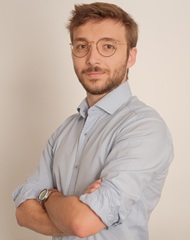
Alexandre Daby-Seesaram is assistant professor at ENSTA. His work lies at the intersection of computational mechanics, model reduction, and biomedical applications. After earning his PhD in computational mechanics from ENS Paris-Saclay (prepared at LMPS - Laboratoire de Mécanique Paris-Saclay), Alexandre joined École Polytechnique for a two-year postdoctoral fellowship. It was during this period that he began applying model reduction methods to biomechanics, with the aim of creating digital twins specific to each patient. His current research focuses on model reduction for solving highly nonlinear problems, using Proper Generalized Decomposition (PGD) in particular. At the heart of his work, he explores the hybridization between these classical methods and machine learning, combining tensor decomposition and interpretable neural networks. The ultimate goal of his work is to transform these mathematical tools into concrete clinical applications, enabling the simulation of human organs in real time for individualized precision medicine.
*LMI: ENSTA, Institut Polytechnique de Paris, Palaiseau, France
** As part of the STEP² project selected by the ANR during the call for projects “Excellence in all its forms” (EXES) France 2030 (ANR-22-EXES-0013)
***LMS : a joint research unit CNRS, École Polytechnique, Institut Polytechnique de Paris, 91120 Palaiseau, France